


Hantavirus is a rare but serious viral infection spread primarily through contact with infected rodents and contaminated environments. In severe cases, it can lead to Hantavirus Pulmonary Syndrome (HPS), a serious lung condition where fluid builds up in the lungs, making breathing difficult and potentially life threatening.
While the risk in Singapore remains very low, recent international reports linked to an outbreak associated with travel from South America have raised public concern. Singapore residents travelling to affected regions, or returning from them, should be aware of the symptoms and when to seek medical attention.
- Hantavirus is rare in Singapore and the risk to residents is very low
- Early signs look like flu; watch for cough and difficulty breathing as the condition worsens
- Seek emergency care immediately if you develop respiratory symptoms
- Early hospital admission significantly improves the chances of survival
Hantavirus Outbreak: What you need to know
In early May 2026, health authorities around the world were alerted to a cluster of hantavirus infections linked to a cruise ship that had travelled across the Atlantic Ocean. The outbreak originated in Argentina. The cruise ship departed from Argentina on April 1 and travelled across the South Atlantic, stopping at remote islands.
Two Singapore residents who were on the affected cruise ship have been monitored and tested. As of May 9, 2026, Communicable Diseases Agency (CDA) confirmed that they tested negative for hantavirus. They remain under quarantine as a precaution. Refer to official CDA updates for the latest developments.
What is Hantavirus?
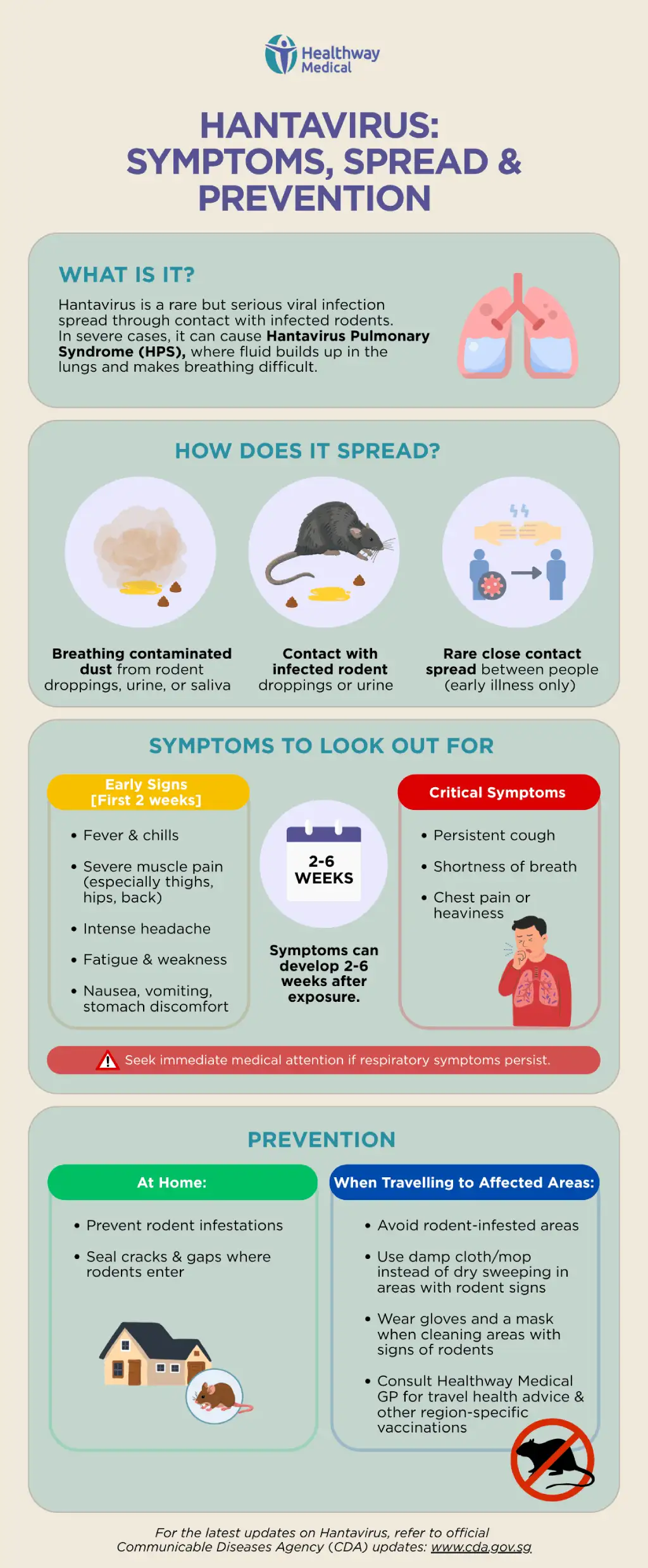
Hantavirus is a family of viruses naturally carried by rodents. There are many different types of hantaviruses found around the world, each carried by different rodent species in different regions. People can become infected when they breathe in dust contaminated with urine, droppings or saliva from infected rodents, especially when cleaning up after rodents.
The Andes virus, found in parts of South America, is a notable exception among hantaviruses and has demonstrated limited human-to-human transmission. Most human infections still occur through contact with infected rodents or contaminated environments. Person-to-person spread, when it occurs, is associated with close and prolonged contact, particularly among household members or intimate partners, and appears most likely during the early phase of illness.
How does infection happen?
Understanding how the virus spreads helps you protect yourself:
- Contact with infected rodents: The main route of infection is through exposure to droppings, body fluids, or nesting materials from infected rodents, especially during cleaning or handling of contaminated areas.
- Breathing contaminated air: When cleaning areas with rodent droppings, urine, or nesting materials, dust becomes airborne and can be inhaled.
- Direct Contact with Contaminated Materials: Touching rodent droppings, urine, or saliva, then touching your face or mouth without washing hands.
- Person-to-person transmission: In rare cases, the Andes strain of hantavirus can spread between people through close and prolonged contact, particularly among household members or intimate partners, and appears most likely during the early phase of illness. Person-to-person spread remains extremely rare and has only been clearly documented with the Andes virus strain in South America.
Important: The virus does NOT spread through ordinary social interaction. Shaking hands, eating together, or being in the same room with someone who has hantavirus will not infect you.
Can hantavirus spread through the air?
Hantavirus can become airborne when dust contaminated with the urine, droppings or saliva of infected rodents is disturbed. This can happen when sweeping, cleaning or entering enclosed spaces with rodent activity.
However, hantavirus is not airborne in the same way as COVID-19 or influenza. It does not usually spread through casual contact, coughing, sneezing or simply being near someone who is infected. Ordinary social interaction, such as shaking hands, eating together or being in the same room, is not considered a typical route of transmission.
Recognising Hantavirus Symptoms

After exposure, symptoms typically develop within 2 to 4 weeks, though it can take up to 45 days in some cases. The illness progresses in stages, with symptoms typically including fever, body aches, fatigue, gastrointestinal symptoms and difficulty breathing, which progress rapidly.
Initial phase (first few days)
- High temperature and chills
- Intense headache
- Muscle pain throughout the body (especially thighs, lower back, and hips)
- General feeling of sickness and exhaustion
- Stomach symptoms (nausea, vomiting, or abdominal discomfort)
Respiratory phase (develops within 4-10 days, critical stage)
- Persistent cough that develops
- Increasing shortness of breath
- Pain or heaviness in the chest
- Rapid worsening of breathing problems—this requires immediate hospital admission
Seek medical help immediately if:
You experience a persistent cough with difficulty breathing and if you had fever and body aches in the week before.
Who should stay vigilant?
- Travellers who have recently visited South America, especially Argentina or remote/rural areas
- People who were on the same flights as confirmed cases from the cruise (especially flights from St Helena to other destinations on April 25 and after)
- Family members or caregivers of confirmed hantavirus patients
- Workers who handle rodents or work in heavily infested environments
Staying Safe: Prevention Measures
Protecting yourself starts with awareness and precaution.
In Singapore:
- Keep your living space clean and free from rodent access
- Close off entry points—seal cracks, holes, and gaps in walls and foundations
- Store food in sealed containers to avoid attracting rodents
- Maintain basic cleanliness and good personal hygiene
- Contact licensed pest control services if you notice signs of infestation in your home or workplace
If travelling to South America:
- Avoid places where you know rodent infestations exist
- Never attempt to touch, feed, or capture wild rodents
- Avoid entering buildings or areas with obvious signs of rodent activity (visible droppings, stains, or nests)
- Use a damp cloth or mop to clean surfaces instead of dry sweeping to avoid stirring up potentially contaminated dust particles
- Wear protective gloves and a face mask, and ensure good air flow
- Wash your hands before eating or touching your face
Additionally, before travelling, it’s best to consult with Healthway Medical about recommended travel vaccinations such as Yellow Fever and Typhoid to stay protected against other regional health risks. Our GPs can also advise on general preventive health measures you can take during your travels.
Medical care and treatment
There is no specific antiviral treatment for hantavirus. Treatment consists of supportive care and management in hospital if required. However, proper hospital care is lifesaving. If diagnosed with hantavirus:
- Hospital admission is crucial—you need continuous monitoring and medical support, especially if breathing becomes difficult
- Supportive treatment: Hospital staff will provide intravenous fluids, oxygen therapy, and medications to manage fever and other symptoms while your immune system fights the virus
- Breathing assistance may be needed—some patients require a breathing tube to be inserted so that a machine can help them breathe (mechanical ventilation)
- Early hospital care saves lives—the earlier you seek help, the better the outcome
For more information, visit:
- Communicable Diseases Agency (CDA) — Official Singapore health authority for infectious disease updates and guidance
- National Centre for Infectious Diseases (NCID) — Singapore's specialist facility for hantavirus testing and management
- WHO Hantavirus Information — Global health guidance and outbreak tracking
- CDC Hantavirus Resources — Comprehensive prevention and treatment information
Frequently Asked Question
Is there hantavirus in Singapore?
No documented cases of hantavirus infection from the virus strain discussed here exist in Singapore. The risk to the general public in Singapore is currently low.
How is hantavirus transmitted?
The virus is transmitted through contact with infected wild rodents, primarily their droppings, saliva, or urine. The strains linked to recent outbreaks are associated with wild rodents in affected geographic regions. The virus is only found in wild rodent populations in specific geographic areas, primarily South America.
I travelled to South America six months ago. Should I worry now?
Symptoms typically appear within 2 to 4 weeks of exposure, with the maximum period being 45 days. If you travelled that long ago without falling ill, the likelihood of infection is extremely low. However, if you suddenly develop relevant symptoms, see a doctor and mention your travel history.
Is there a vaccine to prevent hantavirus?
There is no specific antiviral treatment or vaccination for hantavirus. The best protection is to avoid exposure to infected rodents through prevention measures. Before travelling to affected areas, speak with a Healthway Medical GP about general preventive health measures.
What if I suspect I have hantavirus?
If you develop symptoms consistent with hantavirus (fever, muscle aches, and especially cough with shortness of breath), seek immediate emergency care by calling 995. Inform hospital staff of your recent travel to South America or cruise ship exposure. You may need to be tested and isolated at a medical facility like the National Centre for Infectious Diseases (NCID) for monitoring and supportive treatment.
Related Articles

Why Is My Child Always Coughing at Night? Could It Be Asthma?
July 07, 2026
Can Pregnancy Increase the Risk of a UTI
July 07, 2026