

Cervical cancer can have profound effects on women's health and well-being. It affects not just physical health but also emotional and psychological stability. Women diagnosed with cervical cancer may experience anxiety, stress, and concerns about fertility and sexual health. In Singapore, cervical cancer has a significant public health impact, being the 10th most common cancer in Singaporean women.
This underscores the need for increased awareness and education to reduce late-stage diagnoses. Despite advances in cervical cancer treatment, many cases can be prevented through regular screenings and vaccinations, highlighting the need for proactive and preventive measures against cervical cancer.
How does Cervical Cancer affect women's health?
Beyond the physical toll, cervical cancer can affect many aspects of a woman's life, from her emotional well-being to her relationships and plans.
| Psychological Challenges | Women diagnosed with cervical cancer often experience a complex array of emotions, including anxiety, depression, and fear about their prognosis and treatment. These psychological challenges can persist even after treatment, with ongoing concerns about cancer recurrence and struggles with self-esteem. |
| Fertility Issues | Depending on the stage of cervical cancer and the treatment approach, some women may have concerns about fertility. In certain cases, fertility-sparing options may be available — speaking with a specialist early allows women to understand their options and make informed decisions about their care. |
| Sexual Dysfunction | Some women may experience sexual dysfunction due to physical changes like vaginal dryness or pain during intercourse, as well as emotional barriers such as low libido. These issues can profoundly affect intimate relationships and a woman's sense of identity. |
The multifaceted nature of these challenges highlights the importance of comprehensive care that addresses not only the physical aspects of cervical cancer but also provides preventive care approaches, psychological support, sexual health counselling, and fertility preservation options when possible.
Understanding Cervical Cancer & Its Risks
Almost all cervical cancers are caused by a persistent infection with human papillomavirus (HPV) — a common sexually transmitted infection. While most HPV infections clear on their own, certain high-risk strains can cause abnormal cell changes in the cervix over time. According to Singapore's Communicable Diseases Agency, oncogenic strains such as HPV-16 and HPV-18 are responsible for the majority of cervical cancers, though other high-risk strains, including HPV-52 and HPV-58, are also prevalent locally.
Some women are more susceptible to persistent infection than others, depending on their health history and lifestyle. Check below to see if any of these risk factors apply to you.
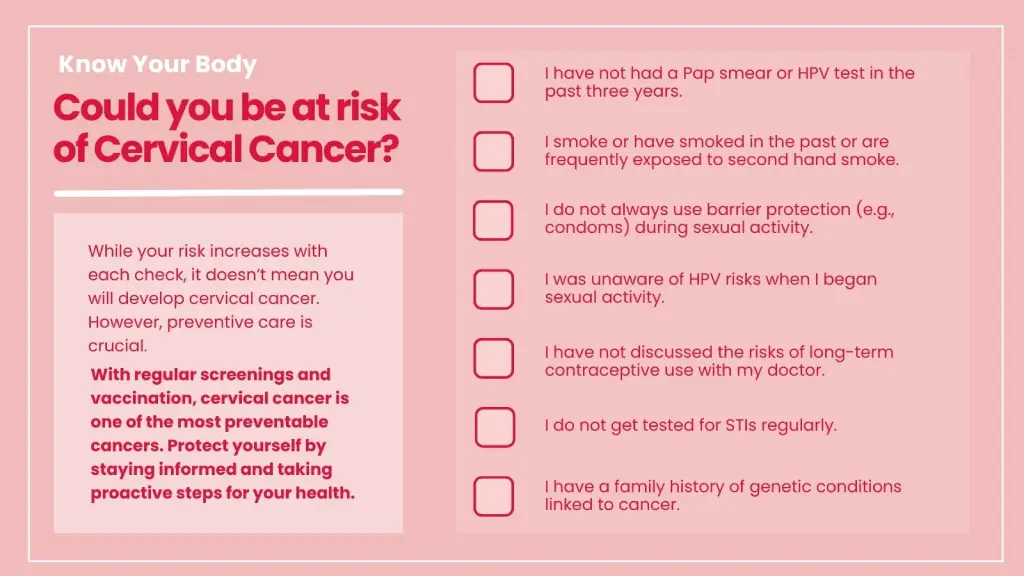
Understanding your risk is the first step. The next is knowing what to watch for. Early-stage cervical cancer often presents no symptoms, which is why regular screening is so important. When symptoms do appear, they may include:
- Abnormal vaginal bleeding
- Unusual vaginal discharge
- Persistent pelvic pain
- Pain during urination
- Changes in menstrual patterns
- Leg swelling (in advanced stages)
Stages of Cervical Cancer
Cancer stages describe how far the cancer has spread in your body. Understanding the stages of cervical cancer is crucial, as it guides treatment decisions and helps predict outcomes. For cervical cancer, there are four main stages. The lower the number, the less the cancer has spread.
| Stage 1 | Stage I is considered the early stage of cervical cancer. At this point, the cancer is only in the cervix and hasn't spread to other parts of the body. This is often the most treatable stage, with surgery being a common approach. Many women diagnosed at this stage have a good chance of successful treatment and recovery. |
| Stage 2 | As we move to Stage II, the cancer has grown beyond the cervix. It might be in the upper part of the vagina or in nearby tissues. This stage is often referred to as locally advanced cervical cancer. Treatment at this stage usually combines chemotherapy and radiotherapy, an approach known as chemoradiotherapy. While more intensive than treatment for Stage I, many women still respond well to treatment at this stage. |
| Stage 3 | Stage III indicates that the cancer has spread further into the pelvic area. It might be affecting the lower vagina or the pelvic walls. In some cases, it could be blocking the kidneys, which can cause additional health problems. Treatment for Stage III typically involves a combination of chemotherapy and radiotherapy, similar to Stage II but often more aggressive. The goal is to shrink the tumour and prevent further spread. |
| Stage 4 | Stage IV is the most advanced stage of cervical cancer. It's divided into two sub-stages: IVA and IVB. In Stage IVA, the cancer has spread to nearby organs like the bladder or rectum. In Stage IVB, the cancer has spread to distant parts of the body, such as the lungs or liver. Treatment at this stage focuses on controlling symptoms and improving quality of life, rather than curing the cancer. |
Importance of Screening & Vaccination for Preventing Cervical Cancer
Screening and vaccination are the two most effective tools for protecting against cervical cancer. Detecting abnormal cell changes early offers the best chance of successful treatment. At the same time, the HPV vaccine helps protect against the high-risk strains responsible for the majority of cervical cancer cases.
A Pap smear and HPV testing are essential tools for cervical cancer prevention and early detection:
- Pap Smear: This test examines cervical cells for abnormalities that could indicate precancerous changes or cervical cancer. It helps detect abnormal cell growth early, allowing for timely intervention before it progresses.
- HPV Testing: This test identifies the presence of high-risk strains of human papillomavirus (HPV) — the leading cause of cervical cancer. Detecting these strains helps assess a woman's risk and determine whether closer monitoring or further action is needed.
Together, these tests offer a comprehensive approach to safeguarding cervical health.
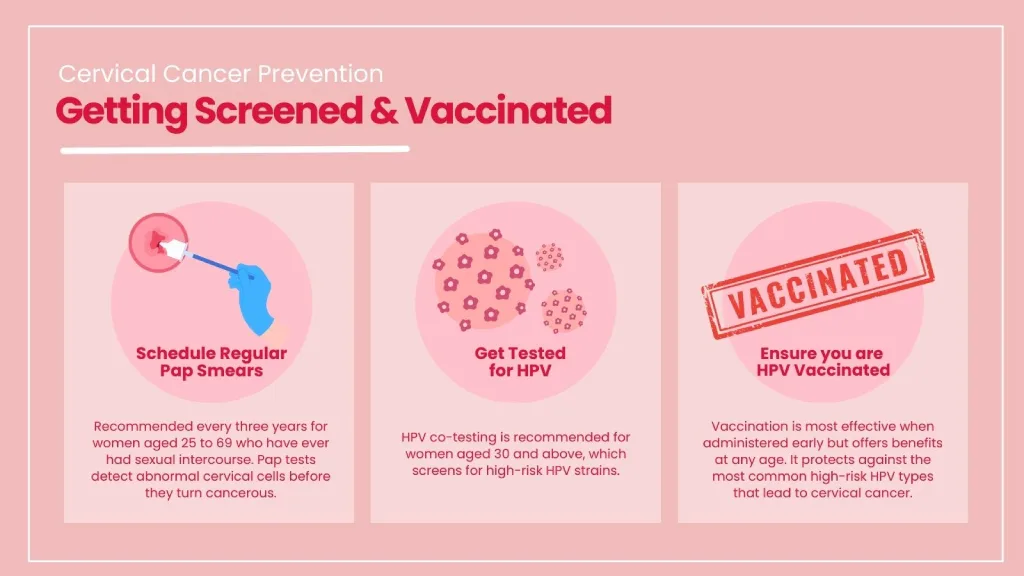
Early detection significantly improves the chances of successful treatment and can prevent precancerous conditions from progressing into cervical cancer. Regular screenings play a crucial role in identifying abnormalities before symptoms appear, helping to reduce the occurrence of late-stage diagnoses.
Related Articles

Adult Vaccination Costs in Singapore: Subsidies and MediSave Explained
October 06, 2026
CHAS, Healthier SG and MediSave: What’s the Difference?
September 28, 2026