

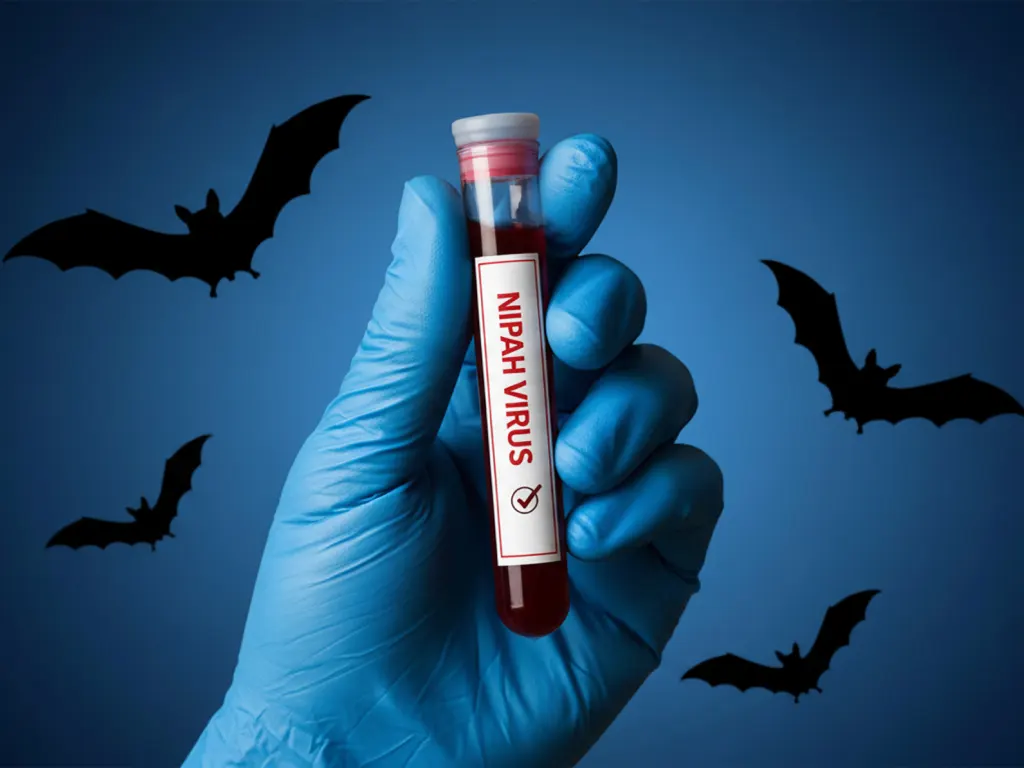
Recent news about a Nipah virus outbreak in India has led some Asian countries to step up airport checks and health monitoring. That can sound scary at first. But knowing what Nipah virus is and how doctors assess risk can help you stay informed without worrying unnecessarily.
How Does Nipah Virus Spread?
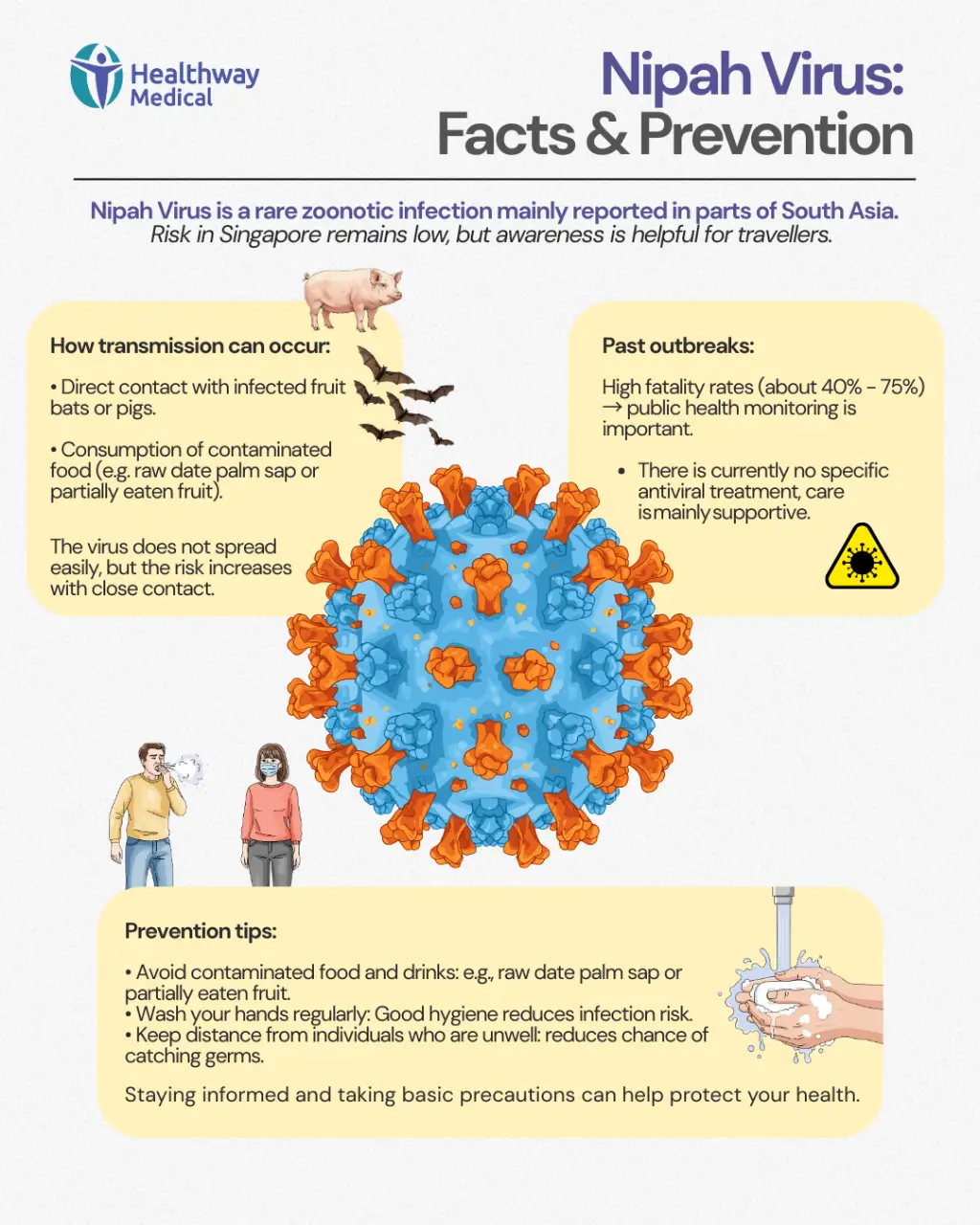
Nipah virus can spread through:
- Fruit bats are the natural carriers, contact with fruit bats or infected animals
- Eating contaminated food products (such as fruit that has been bitten)
- Close contact with someone who is infected, especially their saliva or respiratory fluids
Seeing Nipah Virus on the Headlines
When Nipah virus appears in the news, it often gets a lot of attention. This is because it’s a rare illness that can be severe, even though cases are still few. News reports may also mention its high mortality rate, which can sound alarming.
What is often missing from headlines is how uncommon these infections are. This can cause worry especially when people experience everyday symptoms like fever, cough, or tiredness after travelling.
How Doctors Assess Nipah Virus Risk
When Nipah virus is mentioned, assessment focuses on the following main points:
1. Symptoms:
Such as persistent fever, neurological symptoms, muscle pain, or difficulties in breathing.
2. Exposure history:
Including contact with confirmed cases or animals known to carry the virus.
3. Recent travels:
Especially to areas where infections have been reported.
Further confirmation of condition can be done via detection of NiV via PCR in blood samples.
In the absence of travel and exposure, Nipah virus is less likely to be the cause of presenting symptoms.
Why Travel History Matters

Most Nipah virus cases are linked to specific regions. That’s why travel history matters during medical assessment.
Although there is currently no outbreak of Nipah virus in Singapore yet, as a precaution, Singapore has introduced temperature screening at airports. These measures help identify unwell travellers early and reduce the risk of imported infections.
Treatment, Prevention, and Common Concerns
Treatment is predominantly supportive for Nipah virus at this time with care focusing on managing symptoms and supporting recovery.
To reduce risk:
- Avoid contact with bats or sick animals
- Avoid eating fruit that may be contaminated
- Practise good hand hygiene
- Seek medical advice if you feel unwell after travel
Many people also ask whether it is safe to travel to India now. For most travellers, travel remains safe. Staying informed, practising good hygiene, and seeking medical care if symptoms develop after returning are good precautions.
When to Seek Medical Advice
You should see a doctor if you:
- Have a fever that does not improve or worsens
- Experience confusion, unusual drowsiness, seizures, or breathing difficulties
- Feel unwell after recent travel to areas where Nipah virus cases have been reported
- Had close contact with a confirmed or suspected case
Seeing a doctor early allows for proper assessment, reassurance, and timely care.
Staying Informed, Staying Calm
Being informed is important, but there is no need to panic. Understanding health information clearly and seeing a doctor when symptoms arise are the best steps you can take.
If you have concerns about your health or recent travel, our doctors at Healthway Medical can assess your situation and advise on the next steps.
Nipah Virus Frequently asked questions
Nipah virus is a rare but serious infection that can cause brain inflammation (encephalitis) and/or pneumonia (lung infection). It can be severe and has caused outbreaks in parts of Asia.
Where does Nipah virus come from?
The virus naturally lives in fruit bats (Pteropus species). Sometimes pigs can act as an “amplifying host” (the virus spreads in pigs and then to humans).
People can be infected through:
- Contact with infected animals (bats, pigs) or their body fluids/waste
- Eating/drinking contaminated food (e.g., fruits or raw date palm sap contaminated by bat saliva/urine)
- Close contact with a sick person (human-to-human spread has been documented, especially among family/caregivers and in healthcare settings)
It can be, but spread between people is usually linked to close contact (for example, caring for someone who is ill, or exposure to their respiratory secretions/body fluids).
Can I catch Nipah from casual contact (e.g., passing someone in public)?
The guidance describes transmission through close contact with secretions/excretions. Casual brief contact is not highlighted as the main risk; higher risk is among household/caregivers and healthcare exposure.
What are the symptoms of Nipah virus?
Early symptoms may look like other common illnesses:
- Fever, headache, muscle aches, vomiting, sore throat
More serious signs can include:
- Drowsiness, confusion, seizures, coma (encephalitis)
- Cough, breathing difficulty, pneumonia, respiratory distress
How long after exposure do symptoms start?
- Incubation period: 4 to 45 days
- Most people who develop symptoms do so within 4 to 14 days after exposure
Can someone have Nipah without symptoms?
Yes, mild or asymptomatic infections have been reported, but the guidance notes truly asymptomatic infection is uncommon (<10%).
How deadly is Nipah virus (mortality rate)?
Nipah can be highly fatal. Past outbreaks reported a case fatality ratio (CFR) around 40% to 75%, depending on outbreak setting and healthcare capacity.
No. The guidance states there are no licensed vaccines available for prevention.
Is there treatment for Nipah virus?
There is no proven specific cure. Care is mainly supportive treatment (hospital care to support breathing, manage complications, and involve specialists as needed).
Some medicines (like ribavirin) have been used in past outbreaks, but the guidance notes the evidence in humans is unclear, and other treatments are still under development/evaluation.
I’m sick after traveling, when should I worry?
See a doctor urgently if you have fever plus:
- Severe headache/confusion/seizure symptoms or
- Breathing difficulty/pneumonia-like symptoms
And especially if you had (recently):
- Travel to an affected region
- Exposure to bats/pigs or bat-contaminated food
- Close contact with a suspected/confirmed case
Based on how it spreads, practical steps include:
- Avoid raw date palm sap
- Avoid fruits that might be contaminated by bats (especially partially eaten fruit)
- Avoid contact with bats, pigs, or their body fluids
- If caring for someone sick: avoid contact with their body fluids and practice good hygiene
What should I do if I suspect Nipah?
For the public:
- Don’t self-diagnose: Go to a clinic/Emergency Department for assessment, especially with severe symptoms.
- Tell the doctor your travel and exposure history.
Related Articles

Adult Vaccination Costs in Singapore: Subsidies and MediSave Explained
October 06, 2026
CHAS, Healthier SG and MediSave: What’s the Difference?
September 28, 2026