

Colorectal cancer is one of the most common cancers in Singapore, yet it is also one of the most preventable. Colorectal cancer screening plays a crucial role in identifying potential issues early, often before symptoms appear.
If you’re considering screening, you may come across two common options: the Fecal Immunochemical Test (FIT) and colonoscopy screening. While both are effective tools, they serve different purposes and may be more suitable at different ages or risk levels.
What Is the FIT Stool Test?
The Fecal Immunochemical Test (FIT) is a non-invasive stool test that checks for hidden blood in your stool, which can be an early sign of colorectal cancer or large polyps. The blood detected is not visible to the naked eye, which makes FIT a valuable early screening tool.
FIT is commonly used as a first step in colorectal cancer screening for people without symptoms.
How the FIT Test Works
You collect a small stool sample at home using a test kit. The sample is then sent to a laboratory for testing, where it is checked for small amounts of blood in the stool. If blood is detected, further tests, such as a colonoscopy, are usually recommended to identify the cause.
Benefits of the FIT Test
- Non-invasive and painless
- Can be done at home
- No bowel preparation needed
- Affordable and widely available as a stool test in Singapore
Limitations of FIT
- Only detects blood, not polyps themselves
- Needs to be done every year
- A positive result means you still need a colonoscopy
FIT is best suited for individuals at average risk who do not have symptoms. As age or risk factors increase, other screening options may become more appropriate.
What Is a Colonoscopy?
A colonoscopy is a procedure in which a doctor uses a thin, flexible camera to examine the entire colon. It allows for a direct visual inspection of the colon and the removal of polyps during the same procedure.
What to Expect During a Colonoscopy
On the day of the procedure, you will receive sedation to help you relax. The examination usually takes less than an hour, and most patients go home on the same day after a short recovery period. Many people worry about discomfort, but most do not remember the procedure itself due to the sedation.
Before the procedure, you will need to undergo bowel preparation to clear the colon. This is often the part patients find most inconvenient but is crucial for ensuring the accuracy of the procedure.
Benefit of Colonoscopy Screening
- Detects and removes polyps in one session
- Can diagnose cancer early
- Usually only needed once every five to ten years if results are normal
Limitations of Colonoscopy
- Invasive procedure
- Requires bowel preparation
- Small risks, which your doctor will explain
Colonoscopy is considered the gold standard for colon cancer screening and provides a more comprehensive check than FIT.
FIT vs Colonoscopy by Age Group
At Age 40
For those who are healthy and have no family history of colorectal cancer, routine screening is not yet essential but should be discussed with a doctor.
- FIT may be considered for early baseline screening
- Colonoscopy may be advised if you have symptoms (e.g., blood in stool, persistent changes in bowel habits) or a family history of colorectal cancer.
At age 50
Routine screening is strongly recommended at this age, in line with Singapore’s Ministry of Health guidelines. At this stage:
- FIT is suitable for individuals who prefer a non-invasive option and have no symptoms.
- Colonoscopy offers a more comprehensive check and provides longer reassurance
- CT Colonography (otherwise known as a ‘virtual’ colonoscopy) can be considered if you are unable or unwilling to undergo a colonoscopy. If anything, abnormal is found, a follow up colonoscopy will still be needed.
Many patients may begin with a FIT and later opt for colonoscopy for peace of mind.
At age 60
At age 60, the risk of colorectal cancer increases, and a colonoscopy is often recommended. It allows for direct visualisation and removal of polyps, which can prevent cancer.
If colonoscopy is not suitable, CT Colonography may be an alternative. It helps detect problems, but cannot remove tissue for diagnosis. FIT can still be used if the individual is asymptomatic and has no family history of cancer. However, it needs to be done regularly and any positive results must be followed up.
When Colonoscopy Is the Better Choice
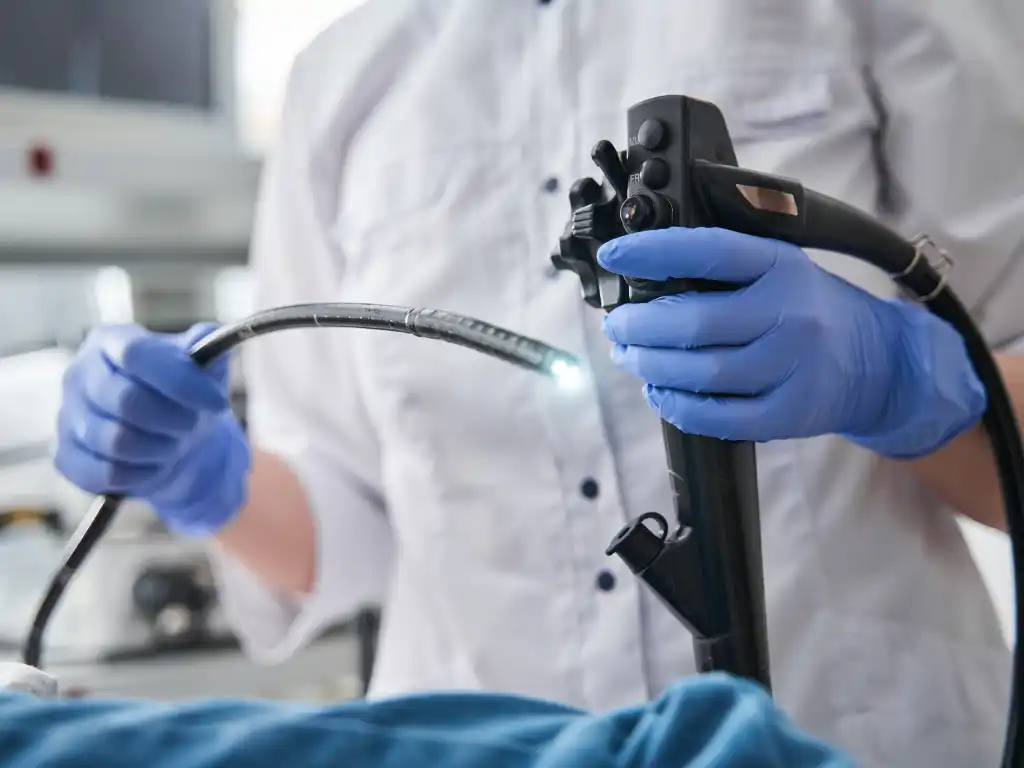
While FIT is a useful screening tool, a colonoscopy is recommended in the following cases:
- A positive FIT result
- Blood in stool or unexplained anaemia
- Persistent change in bowel habit
- A family history of colorectal cancer
- Previous colonic polyps
In these situations, a colonoscopy will be the most appropriate diagnostic tool.
Making the Right Choice for Your Health
The best screening option depends on your individual health profile, including age, risk factors, symptoms, and comfort level. An assessment by a colorectal surgeon can help guide you in choosing the most appropriate screening method.
At Ten Surgery, our experienced colorectal surgeons can help you make an informed decision about your screening options.
Screening decisions should always be based on medical advice, not fear or convenience alone. Early detection saves lives. Whether you start with a stool test or proceed directly to colonoscopy screening, taking the first step is what matters most.

Medically Reviewed by Dr Toh Ee Lin
Senior Consultant Surgeon at TEN Surgery
Related Articles

Urinary Tract Infection (UTI): Symptoms and When to See a Doctor in Singapore
May 05, 2026
A Lump Isn’t the Only Sign: Early Symptoms of Testicular Cancer Men Miss
April 22, 2026