
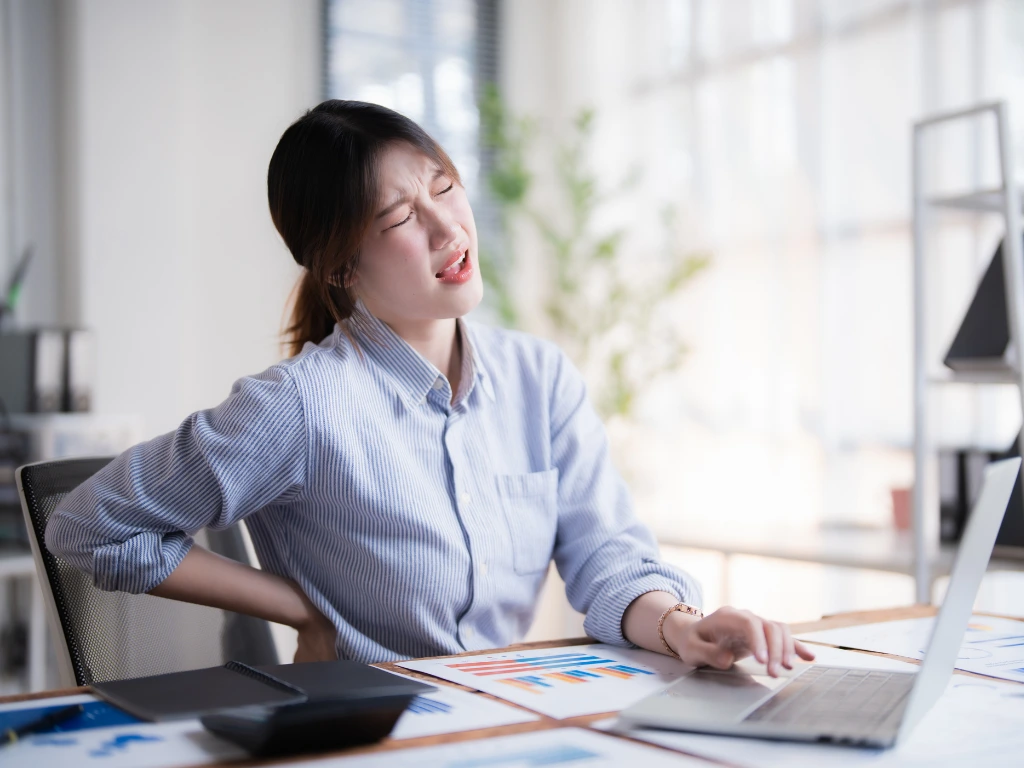
If your back aches after a long day at the office, you are not alone. Back pain is one of the most common complaints among office workers in Singapore, even among those who do not perform physically demanding work.
While long hours at a desk are often blamed, back pain usually develops due to a combination of everyday factors. Flat feet, bad posture, and poorly adjusted seating including the wrong office chair setup can quietly place strain on your body over time. Understanding how these issues are connected is an important step towards finding the right back pain treatment and learning how to relieve back pain effectively.
How Flat Feet Can Affect your Back
Flat feet may seem unrelated to back pain, but your feet play a major role in how your body stays aligned. When the arches of your feet collapse or are very low, your ankles tend to roll inwards. This changes how your knees, hips, and pelvis move when you walk or stand.
As a result, your lower back must work harder to keep you upright. Over time, this extra strain can lead to persistent back pain, especially for people who sit and stand frequently at work. Flat feet are often overlooked, yet they are a common hidden contributor to spinal discomfort.
The Impact of Desk Posture and Office Chairs on Your Back
Bad desk posture can place constant strain on your back during long hours of sitting. Slouching, leaning to one side or crane your neck forward puts uneven pressure on the spine and surrounding muscles. Over time, this can lead to stiffness, tight shoulders and lower back pain.
Your office chair also plays a role. Chairs without proper lumbar support or correct height settings can encourage poor posture. Even an ergonomic office chair may cause discomfort if it is not adjusted properly or if your feet do not rest flat on the floor. Together, poor posture and unsuitable chairs can increase strain and contribute to ongoing back pain.
How These Factors Work Together
Back pain rarely comes from a single cause. Flat feet affect how you stand and walk. Bad posture affects how you sit and move. An unsuitable office chair reinforces poor positioning.
Together, these factors create a chain reaction that places ongoing stress on your spine. This is why some people continue to experience pain after changing chairs or doing occasional stretches. Addressing only one factor often leaves the underlying problem unresolved.
Simple Ways to Relieve Back Pain at Work

The good news is that small, consistent changes can make a meaningful difference.
Start by checking your posture throughout the day. Sit with your back supported, shoulders relaxed and feet flat on the floor. Adjust your chair so your hips are slightly higher than your knees.
If you have flat feet, wearing supportive footwear or insoles can help improve alignment from the ground up.
You can also include simple office exercises and stretches during your workday. Gentle back extensions, shoulder rolls and standing hip stretches done every hour can reduce stiffness and improve circulation. Regular movement is just as important as sitting correctly.
Signs it May Be Time to See an Orthopedic Specialist
Back pain is common, especially for those who spend long hours sitting or working at a desk. In many cases, it improves with better posture, regular movement, and simple lifestyle adjustments. However, when pain continues or becomes more noticeable, it may be a sign that something more is going on.
You may want to consult an orthopedic specialist if you experience:
- Back pain that lasts for several weeks or keeps returning
- Discomfort that worsens after work or daily activities
- Stiffness that affects sleep or limits movement
- Tingling, numbness or weakness in the legs
- Pain that becomes worse when sitting, standing or walking
Identifying the underlying cause helps guide appropriate back pain treatment. This may include posture correction, supportive footwear or insoles, targeted exercises, or further investigations when needed. Early assessment can also help prevent ongoing strain and support long-term spine health.
An orthopedic specialist is trained to assess conditions affecting the spine, joints, and overall body alignment. During the review, the doctor looks at how factors such as flat feet, posture, and spinal mechanics work together, rather than focusing on symptoms alone.
At Island Orthopaedics Singapore our specialists take a comprehensive and personalised approach to help identify the root cause of the pain and provide care that supports long-term musculoskeletal.
Frequently Asked Question
Why do so many office workers experience back pain?
Prolonged sitting in an office environment subjects the lower back, hips, and neck to sustained mechanical stress. Maintaining a static position for hours leads to muscular fatigue and compromises the spine's natural alignment. Furthermore, common habits like leaning toward monitors or hunching over laptops, especially without adequate lumbar support, often result in stiffness, muscle imbalances, and ongoing discomfort.
Can flat feet really contribute to back pain?
Absolutely, low arches from flat feet create a domino effect of misalignment that reaches all the way to your spine. As your feet flatten, your ankles roll in, causing your legs and hips to shift out of their natural position. Your lower back then has to work overtime to keep you balanced, which leads to muscle fatigue and chronic pain.
How do bad posture and office chairs affect the back?
When you slouch or crane your neck toward a screen, you are forcing your muscles to work in ways they weren't designed for, which eventually leads to pain and stiffness. Often, our office chairs are the culprits—lacking the back support or height settings we need to sit comfortably. It’s important to remember that an "ergonomic" label isn't a magic fix; if the chair isn't tailored to your specific height and your feet are dangling, you'll still feel the strain at the end of the day.
What are some simple ways to relieve back pain during the workday?
Simple steps include maintaining good sitting posture, ensuring proper back support, keeping the shoulders relaxed and avoiding prolonged sitting. Regular movement and short breaks throughout the day also help reduce stiffness and muscle fatigue.
What office exercises and stretches can help reduce back pain at work?
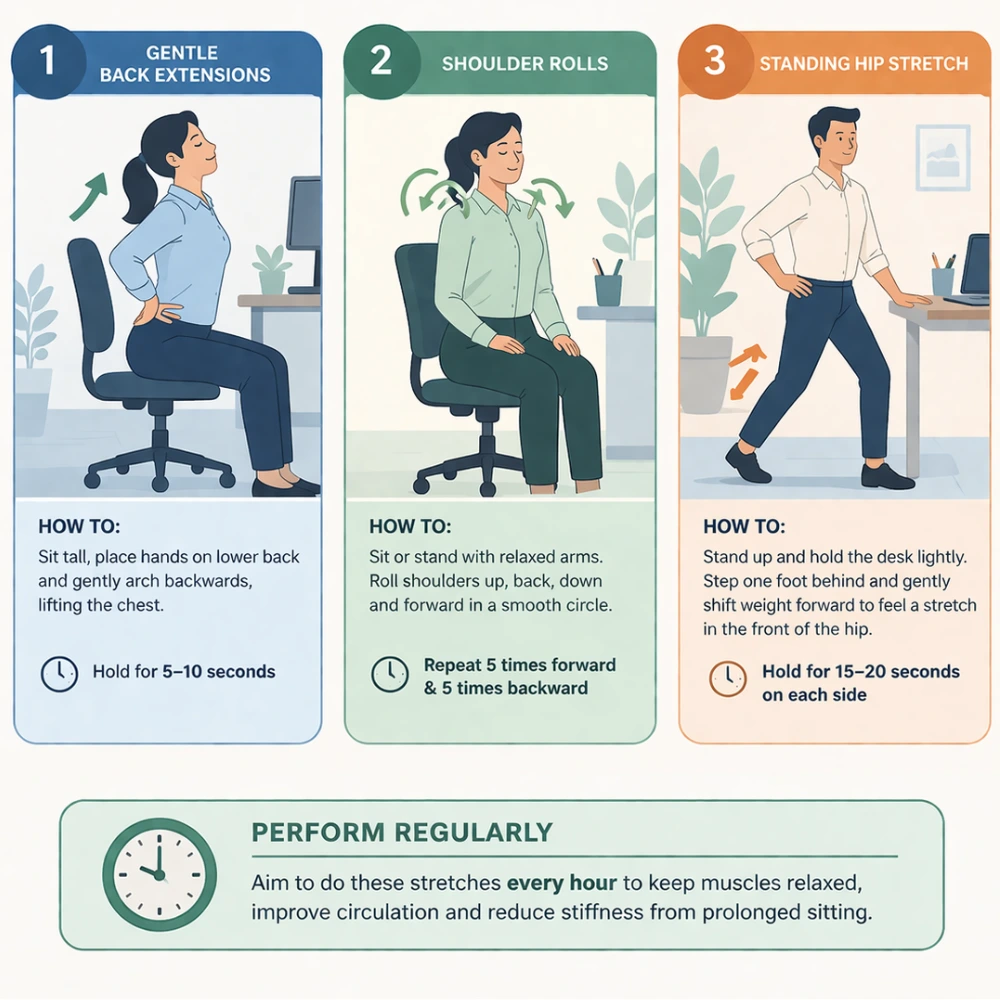
Simple office exercises and stretches such as gentle back extensions, shoulder rolls, and standing hip stretches can help relieve muscle tension and improve circulation. Performing these movements regularly, ideally every hour, can help reduce stiffness associated with prolonged sitting.

Medically Reviewed by Dr Tan Gek Meng, Jeffrey
Senior Consultant Orthopaedic Surgeon
Related Articles

Joint Pain at a Younger Age? Your Lifestyle Might Be the Reason
June 29, 2026
The World Cup Effect: What Your Body Goes Through While You Cheer, Snack, and Celebrate
June 24, 2026