
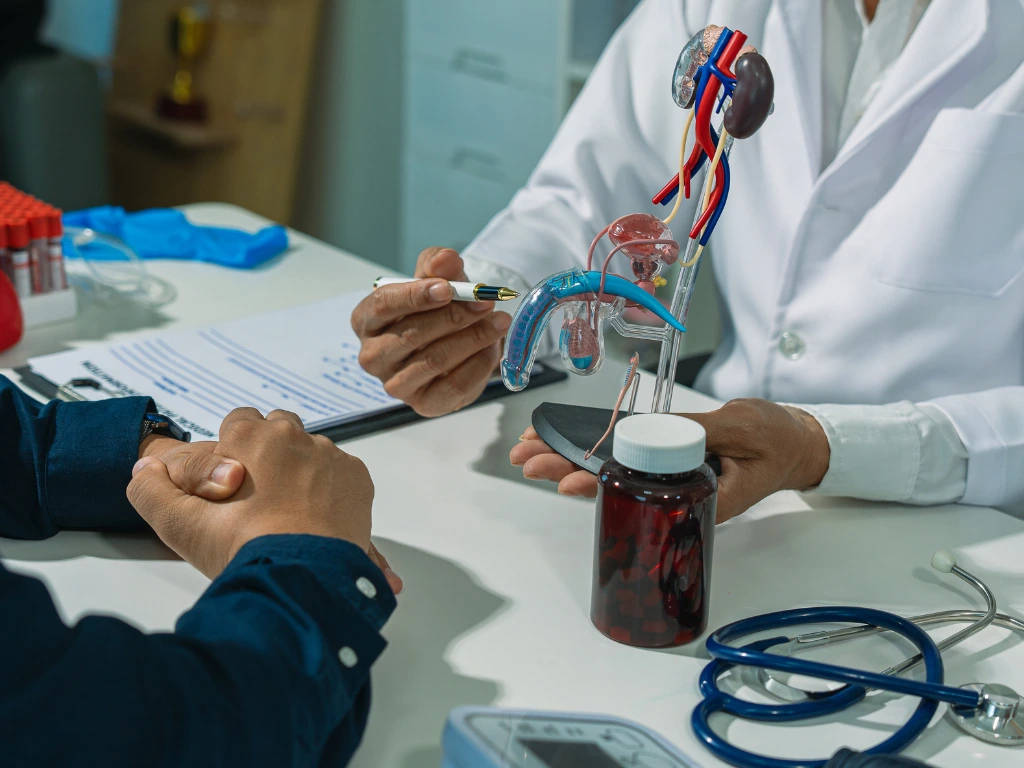
Testicular cancer is a condition where malignant cells form in one or both testicles, the male reproductive organs located in the scrotum. Although it is relatively uncommon, it is the most common cancer in young men aged 15 to 40. The good news is that when detected early, testicular cancer has one of the highest cure rates among cancers.
A simple one-minute self-check each month can help you notice changes early and seek medical advice promptly.
What Is Testicular Cancer?
Testicular cancer develops in the testicles, which are part of the male reproductive system. It most commonly affects men between the ages of 15 and 40.
Although testicular cancer is not very common in Singapore, awareness and early detection are still important. When detected early, treatment success rates are very high, and most men recover fully.
What Causes Testicular Cancer?
The exact testicular cancer causes are not always known, but doctors have identified several risk factors:
- A history of undescended testicles
- Family history of testicular cancer
- Personal history of testicular cancer in the other testicle
- Certain genetic conditions
- History of subfertility
Having one or more risk factors does not mean you will develop cancer. Many men with testicular cancer have no known risk factors at all. This is why regular self-checks are important for all men.
Why Testicular Cancer Affects Younger Men
Most cancers occur later in life, but testicular cancer is different. It is most often diagnosed in teenagers and young adults.
Doctors believe this may be related to changes in the testicles during puberty and early adulthood. Because younger men are often fit and healthy, early signs are sometimes ignored or mistaken for minor issues.
This is why men aged 15–40 are most at risk and should make self-checks a routine habit.
How to Check If You Have Testicular Cancer: The 1-Minute Self-Check
A testicular cancer test does not always start in a clinic. It often begins with a self-check at home.
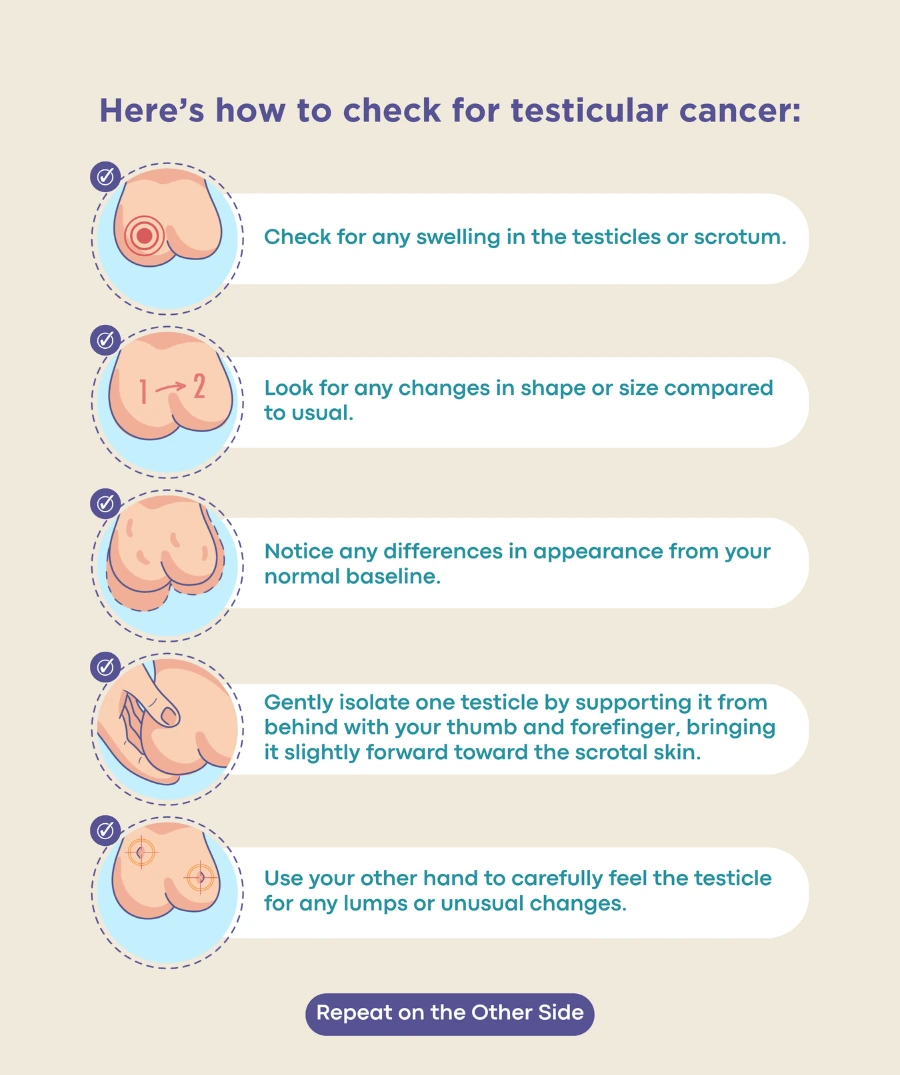
When to Do the Check:
The best time is after a warm shower or a bath. Warmth relaxes the scrotal skin, making it easier to feel any changes.
Step 1: Look
Stand in front of a mirror. Check for any swelling, changes in shape, or differences from your usual appearance.
Step 2: Feel Each Testicle
- Use both hands: place your thumbs on top and your fingers underneath
- Gently roll the testicle between your fingers, do not squeeze
- At the back of the testicle, you may feel a soft, tube-like structure (epididymis). This is normal.
Alternative method: You can also gently isolate one testicle by supporting it from behind with your thumb and forefinger, bringing it slightly forward toward the scrotal skin. Then, use your other hand to carefully feel the testicle for any lumps or unusual changes.
Step 3: Repeat on the Other Side
Once familiar, the whole test takes about one minute.
What Is Normal and What Is Not?
It is normal for:
- One testicle to be slightly larger than the other
- One testicle to hang lower
- Testicles to feel firm but not hard
Changes that should be checked by a doctor include:
- A hard lump
- New swelling
- Sudden size change
- Persistent discomfort
Focus on changes over time, not comparison with others.
Doctors generally recommend a testicular self-check once a month. Monthly checks help you stay familiar with your body and know what is normal, reducing unnecessary worry.
Choose a regular time each month so it becomes a habit.
When to See a Doctor
If you notice any unusual changes, see a doctor promptly. Most testicular lumps are not cancer and may be due to infections or benign conditions. However, only proper testicular cancer screening can rule out serious causes.
A doctor may recommend:
- Physical examination
- Ultrasound scan
- Blood tests, if needed
Early assessment provides clarity and peace of mind.
A Simple Habit That Protects Long-Term Health
Testicular cancer may not be widely discussed, but early detection saves lives. A one-minute monthly self-check is a small habit that can make a big difference.
By understanding testicular cancer causes, recognising early signs of testicular cancer, and knowing how to check if you have testicular cancer, you take an active role in protecting your health.
At Urohealth, we provide respectful and confidential assessment for testicular concerns. When necessary, testicular cancer screening in Singapore can be arranged quickly to ensure timely care and reassurance.
Frequently Asked Question
How is testicular cancer diagnosed?
Diagnosing Testicular Cancer usually involves a few steps. Doctors combine a physical exam, imaging tests, and lab tests to confirm the diagnosis and determine the type.
Is a lump in the testicle always cancer?
No, many testicular lumps are caused by non-cancerous conditions such as cysts, fluid collections, or inflammation. However, any new, hard or painless lump should always be checked by a doctor, as testicular cancer often presents this way in its early stages.
What does a testicular cancer lump usually feel like?
A cancer-related lump is often firm and painless, and located within the testicle rather than on the skin. Some men describe a feeling of heaviness or fullness in the scrotum rather than obvious pain.
Is pain a common symptom?
Pain is not always present. In fact, many men with testicular cancer do not experience pain initially. This is why painless changes or lumps should never be ignored.

Medically Reviewed by Dr. Nathaniel Heah
Senior Consultant Urologist
Related Articles

Adult Vaccination Costs in Singapore: Subsidies and MediSave Explained
October 06, 2026
CHAS, Healthier SG and MediSave: What’s the Difference?
September 28, 2026