

Allergic rhinitis is one of the most common chronic conditions in Singapore, affecting more than 30% of people1. For many, it shows up as a constantly blocked, runny or itchy nose, frequent sneezing, and poor sleep. It is often brushed off as “sinus”, a sensitive nose, nose allergy, or a cold that never quite goes away. Although allergic rhinitis is common, many cases remain undiagnosed and untreated, even when symptoms are moderate to severe1.
Allergic rhinitis responds well to treatment. With the right combination of trigger management and medication, most people can get their symptoms under control and sleep, work and breathe more comfortably. Because allergic rhinitis often goes hand in hand with asthma and eczema, managing it well can also support your wider respiratory health.
What Is Allergic Rhinitis?
Allergic rhinitis is inflammation of the lining of the nose. In people prone to allergies, the immune system mistakes everyday substances such as house dust mites for a threat and reacts to them. This reaction releases chemicals like histamine, which make the lining of the nose swell and produce more mucus, leading to sneezing, a runny or blocked nose, and itchy eyes.
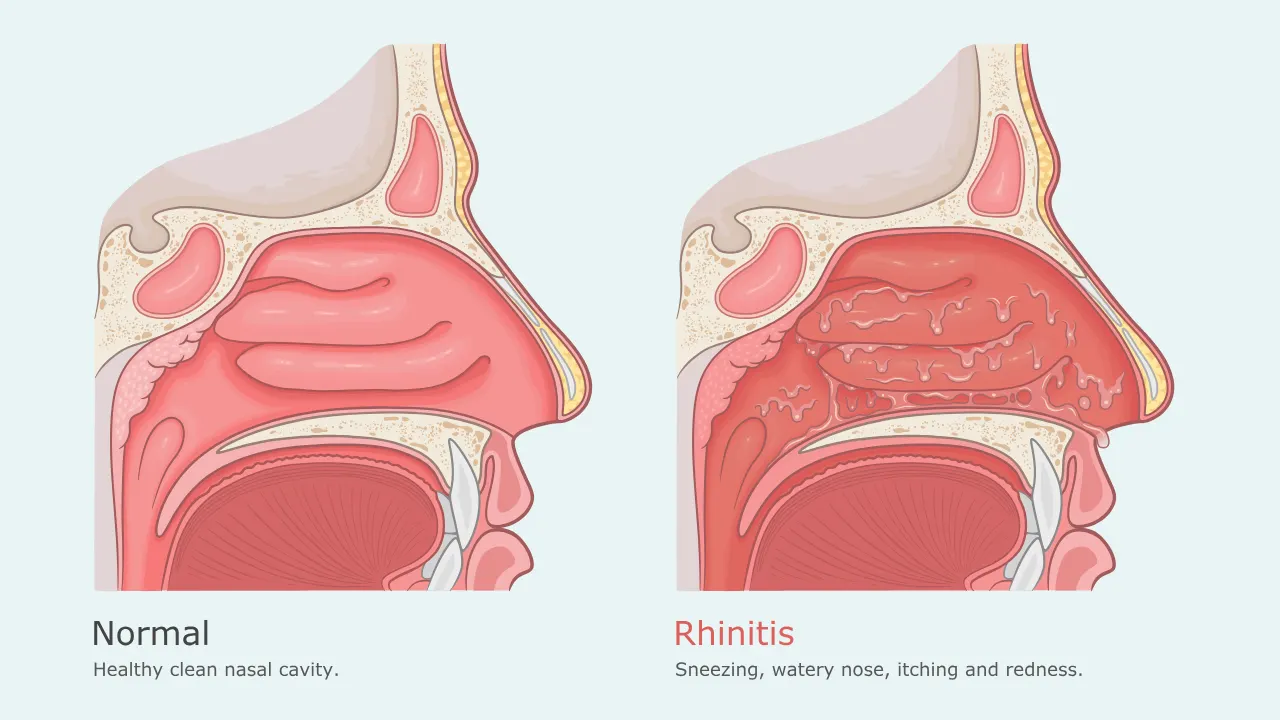
Many people in Singapore call these symptoms "sinus", but allergic rhinitis is not the same as a sinus infection. The difference is in the cause and how it feels.
- Allergic rhinitis is an allergic reaction: it causes sneezing, itch and a clear, watery discharge, with no fever.
- A sinus infection (sinusitis) is usually caused by infection: it brings facial pain or pressure, thick or discoloured (yellow or green) mucus, and sometimes a fever. Untreated allergic rhinitis can also lead to sinus infections, which is part of why the two are mixed up.
Allergic rhinitis can be perennial (year-round) or seasonal. In Singapore's warm, humid climate, most cases are perennial and driven by indoor allergens like dust mites and mould, rather than the seasonal pollen that affects temperate countries.
Symptoms of Allergic Rhinitis
Allergic rhinitis symptoms range from mild to genuinely disruptive, affecting sleep, concentration and daily comfort.
Common symptoms include:
- Frequent sneezing, often in bursts and worse in the morning
- A clear, runny nose (rhinorrhoea)
- A blocked or stuffy nose, which may lead to mouth breathing
- An itchy nose, throat or palate
- Post-nasal drip, where mucus runs down the back of the throat, sometimes causing throat-clearing or a lingering cough
- Itchy, watery or red eyes (allergic conjunctivitis)
A useful clue is that allergic rhinitis does not cause a fever, and symptoms often last far longer than a common cold. If your "cold" has dragged on for weeks, or keeps coming back, allergies may be the real cause.
Who Is More Likely to Develop Allergic Rhinitis?
Allergic rhinitis can affect anyone, but some factors make it more likely:
- A family history of allergic rhinitis, as it tends to run in families
- A personal or family history of asthma or eczema, as these allergic conditions often occur together
- Regular exposure to indoor allergens such as house dust mites, mould or pet dander
- Exposure to irritants like cigarette smoke, haze, strong perfumes or chemical fumes, which can make symptoms worse
Allergic rhinitis often begins in childhood or young adulthood, though it can develop at any age. If you or your child experience ongoing nasal symptoms that interfere with sleep or daily life, it is worth speaking to a GP.
Talk to a Healthway Medical GPHow Allergic Rhinitis Is Diagnosed
Allergic rhinitis is usually diagnosed clinically, which means your GP can often identify it from your symptoms and history without the need for special tests. Your doctor will ask about the pattern of your symptoms, when and where they tend to flare, your home environment, and whether you have a personal or family history of allergies, asthma or eczema. They will also examine your nose, eyes and throat. In many cases, this is enough to confirm allergic rhinitis and start treatment.
Allergy testing, such as a skin prick test, may be considered if your triggers are unclear, if symptoms are persistent, or if specific allergen identification would change your management. This is not needed for everyone, and where it is recommended, it may involve a referral to an Ear, Nose and Throat (ENT) specialist or allergy clinic.
Managing Allergic Rhinitis
The goals of managing allergic rhinitis are to relieve your symptoms, improve your sleep and quality of life, and reduce the risk of complications such as sinus problems or poorly controlled asthma.
Your GP may recommend a combination of trigger management and medication, tailored to how often and how severely your symptoms affect you. Depending on your symptoms, your care plan may include:
- Allergen avoidance — practical steps to reduce your exposure to triggers
- Intranasal corticosteroid sprays — often considered the most effective first-line treatment for persistent allergic rhinitis symptoms. Only a very small amount is absorbed by the body, and they work best when used regularly rather than only on bad days
- Antihistamines — second-generation oral antihistamines or antihistamine nasal sprays to ease sneezing, itch and runny nose. Some older antihistamines can cause drowsiness, so ask your GP which is suitable for you
- Saline nasal rinses — to help clear allergens and mucus, and to help medicated sprays work better
- Reviewing other contributing factors and, where symptoms are difficult to control, discussing whether referral, allergy testing or immunotherapy may help
With consistent treatment, most people see a clear improvement in their symptoms.
Common Allergic Rhinitis Triggers in Singapore

Triggers vary from person to person, but in Singapore's climate the most common culprits are:
- House dust mites — the leading cause of nasal allergies here. They thrive in our warm, humid homes, especially in bedding, mattresses, soft furnishings and carpets
- Mould — which grows readily in humid or damp areas
- Pet dander — from cats, dogs and other furry pets
- Cockroach allergens
- Irritants such as cigarette smoke, haze, incense, strong perfumes and chemical fumes
Practical steps can make a real difference:
- Wash bedding weekly, preferably in hot water where suitable for the fabric,
- Use dust-mite-proof covers on mattresses and pillows,
- Minimise soft toys and carpets in bedrooms,
- Vacuum regularly, and
- Use a dehumidifier or air-conditioning to keep indoor humidity down and discourage dust mites and mould.
You do not need to overhaul your whole home. Your GP can help you focus on the changes most likely to make a difference.
When to Seek Further Assessment
Most allergic rhinitis can be well managed at the GP level. However, see a doctor for further assessment if:
- Your symptoms persist or are not well controlled despite regular treatment
- You have a constantly blocked nose, reduced sense of smell, frequent nose bleeds, or symptoms affecting only one side of the nose
- You also have asthma that is difficult to control, as the two conditions are closely linked
- You develop facial pain, thick or discoloured nasal discharge or fever, which may suggest a sinus infection rather than allergy
Your GP can assess your symptoms, adjust your treatment, and refer you to an Ear, Nose and Throat (ENT) specialist if more detailed assessment or treatment is needed.
Allergic Rhinitis Care at Your GP

A GP is a suitable first point of care for allergic rhinitis, whether your symptoms are new or something you have lived with for years. In most cases, your GP can start and review the main treatments for allergic rhinitis, including allergen-avoidance advice, nasal sprays and antihistamines, without you needing to see a specialist.
Your GP can support you by:
- Confirming whether your symptoms are allergic rhinitis or something else, such as a cold or sinus infection
- Starting and adjusting treatment to bring your symptoms under control
- Giving practical, Singapore-specific advice on reducing your exposure to triggers
- Coordinating care if you also have asthma or eczema, as these allergic conditions often occur together
- Referring you to an ENT specialist if your symptoms are persistent, difficult to control, or if complications are suspected
For ongoing management, repeat prescriptions and follow-ups, you may also find it convenient to consult a GP through telemedicine, without needing to visit a clinic in person.
Using MediSave for Allergic Rhinitis Care
Allergic rhinitis is one of the conditions covered under Singapore's Chronic Disease Management Programme (CDMP). Eligible Singapore Citizens and Permanent Residents may use MediSave to offset eligible outpatient allergic rhinitis treatment costs at accredited GP clinics, subject to prevailing scheme limits and eligibility criteria.
From 1 February 2024, patients enrolled in Healthier SG with a CDMP condition may use MediSave to fully pay for treatment at their enrolled clinic, up to prevailing withdrawal limits, with no 15% cash co-payment required2.
All Healthway Medical GP clinics are accredited CDMP providers. If you have allergic rhinitis and are not yet enrolled in Healthier SG, speak to your Healthway GP at your next visit.
Find a Healthway Medical Clinic Near YouFrequently Asked Questions About Allergic Rhinitis
There is no permanent cure for allergic rhinitis, but it is very manageable. With the right combination of trigger control and medication, most people can keep their symptoms well controlled. For persistent or difficult cases, your GP can discuss further options, such as allergy testing or immunotherapy.
Allergic rhinitis tends to cause sneezing, itch and a clear runny nose without a fever, and symptoms often last for weeks or keep returning. A cold usually clears within a week or two. A sinus infection more often brings facial pain or pressure, thick or discoloured discharge, and sometimes fever. If you are unsure, a GP can help you tell them apart and recommend the right treatment.
Allergic rhinitis is common in children, and some do find their symptoms improve as they grow older. Others continue to experience symptoms into adulthood. Either way, if symptoms are affecting your child's sleep, concentration or daily activities, a GP can help manage them in the meantime.
Intranasal corticosteroid sprays are generally safe for long-term use because only a very small amount is absorbed by the body. They are most effective when used regularly as advised. Decongestant sprays are a different type, used for short-term relief of a blocked nose, and should only be used for a few days. Using them for longer periods of time can actually worsen nasal congestion. Your GP can advise which spray is right for you and how to use it.
Not always. Allergic rhinitis can usually be diagnosed and treated based on your symptoms and history alone. Allergy testing may be helpful if your triggers are unclear, if symptoms are hard to control, or if knowing the specific allergen would change your treatment. Your GP can advise whether testing is worthwhile in your case.
Yes. Allergic rhinitis and asthma frequently occur together and are sometimes described as "one airway, one disease". Treating allergic rhinitis well can support better asthma control, which is why it is worth managing even when symptoms feel minor. If you have both conditions, your GP can help coordinate your care.
References
- Agency for Care Effectiveness (ACE), Ministry of Health Singapore. Allergic Rhinitis – Diagnosis and Management. ACE Clinical Guidance. Available at: https://www.ace-hta.gov.sg/healthcare-professionals/acg-html/allergic-rhinitis---diagnosis-and-management-acg/
- Ministry of Health Singapore. Healthier SG Chronic Tier Subsidy Framework to Start from 1 February 2024. Available at: https://www.moh.gov.sg/newsroom/healthier-sg-chronic-tier-subsidy-framework-to-start-from-1-february-2024/