Deciding to quit smoking is one of the best things you can do for your health. If you are thinking seriously about quitting, that is already an important first step. There's no single "right" way to do it, and if you've tried before, that experience counts in your favour rather than against you. This guide walks you through what to expect and how to stop smoking for good, at your own pace and with the right support behind you in Singapore.
Quick guide to quitting smoking
- Recovery begins earlier than many people think.
Your body starts recovering as soon as you stop, whether you've smoked for five years or fifty. - It's not a willpower problem.
Nicotine is physically addictive, so lean on support rather than grit alone. - Prepare before quit day.
Pick a date, know your triggers, and have a plan ready for cravings — most pass in minutes. - Help is available.
Start with your GP and consider support such as nicotine replacement therapy from pharmacies and HPB's I Quit programme. - A slip isn't failure.
Notice what happened, adjust your plan, and carry on.
Why quitting smoking is worth it
Smoking harms nearly every organ in the body, and it's a major risk factor for the long-term conditions we see most often in Singapore — including chronic obstructive pulmonary disease (COPD), asthma, heart disease, diabetes and high blood pressure.
Locally, smoking is one of the leading causes of preventable death, from both active smoking and second-hand smoke.¹ The encouraging part is that the benefits begin quickly and continue to build over time, from better oxygen levels and breathing to lower long-term risk of heart disease, stroke and lung cancer.
What happens to your body when you stop

Quitting doesn't just lower your future risk; it changes how you feel day to day, from your breathing to your energy to your sense of taste and smell.
- Your heart rate and blood pressure start to settle, and the carbon monoxide from cigarettes clears from your blood, so more oxygen can reach the rest of your body. Over the following weeks and months, everyday effort — stairs, a brisk walk, carrying the shopping — starts to feel less taxing.²
- Your airways relax and the tiny hair-like structures (cilia) that sweep your lungs clean begin to work properly again — so the smoker's cough tends to settle and breathing feels easier.³
- Your senses sharpen. Taste and smell start to return as the nerve endings recover, and food often becomes more enjoyable than it's been in years.³
Further down the line, the deeper benefits continue to build. Over several years, your risk of stroke can fall towards that of someone who has never smoked, and your risk of lung cancer also decreases significantly. It is never too late to benefit from quitting. Stopping now can still change the path ahead.
Preparing to quit smoking

Nicotine is genuinely addictive, and it acts on your brain in ways that make stopping physically hard, not just mentally hard. Most people who smoke are, to some degree, physically dependent on nicotine, which is exactly why "just deciding to stop" so often isn't enough on its own.
Understanding this changes how you approach quitting. Instead of relying on willpower alone and blaming yourself when cravings win, you can plan around the nicotine dependence, use tools that make it easier, and treat a slip as information rather than proof you can't quit.
- Getting yourself mentally prepared
Start by getting clear on your reasons — your health, your family, your finances, your fitness — and write them somewhere you'll see them. Then pick a quit date, ideally within the next couple of weeks: close enough to keep the momentum, far enough to prepare. Telling the people around you helps too, because a bit of encouragement goes a long way in the early days. - Understanding nicotine withdrawal
When you stop, your body goes through a short adjustment as it gets used to functioning without nicotine. Withdrawal can bring irritability, restlessness, low mood, difficulty concentrating and strong urges to smoke. This is normal, and it's temporary. For many people, symptoms are strongest in the first few days, especially the first week, and gradually ease over the next three to four weeks.
Knowing this in advance makes it far easier to ride out. The discomfort is a sign your body is recovering, not a reason to worry.
Ways to quit smoking
There's more than one path to becoming smoke-free, and the best one is the one you will stick with. Some people stop all at once on a set quit date; others cut down gradually, reducing the number each day until they reach zero. Quitting outright tends to be more effective for many people, but a gradual approach can work well if it suits you better.
Whichever you choose, you do not have to rely on willpower alone. Preparing for triggers, planning for cravings and getting the right support can make the process more manageable.
Practical steps to make quitting easier
Once you've chosen an approach, these four steps make the day-to-day of quitting far more manageable.
Identify your smoking triggers
Much of smoking is habit — a cigarette tied to a moment rather than a conscious choice each time. In the few days before you quit, notice when you reach for one: with your morning coffee, after meals, during a work break, when you're stressed, or when others around you light up. Recognising your personal triggers is powerful, because you can't plan around a pattern you haven't spotted yet.
Prepare your environment
Give yourself a clean start. Clear out cigarettes, lighters and ashtrays from your home, car and workspace, and air out the places you used to smoke. The fewer cues around you, the fewer battles you'll have to fight.
Plan what to do when a craving hits
A craving feels urgent, but it's brief. Most pass within a few minutes whether you smoke or not. The trick is to have a plan ready for those minutes. Drink a glass of water, take a short walk, breathe slowly, or keep your hands and mouth busy with something small. Delaying the urge, rather than fighting it head-on, is often all it takes for it to pass.
Get support and follow-up
You don't have to do this alone, and people who have support quit more successfully than those who go it entirely by themselves. That support might be a friend who checks in, GP follows-up, or a structured quitting programme — more on where to find it below.
What about vaping?
E-cigarettes or vapes still deliver nicotine — the same addictive substance you're trying to move away from — along with other chemicals that can harm your lungs. If your goal is to be free of the habit, swapping cigarettes for a vape can keep you tied to nicotine rather than helping you move away from it.
Vaping is also illegal in Singapore, where the purchase, possession, use, import, distribution, sale and offer for sale of e-vaporisers and related components are prohibited.⁴ There have also been growing concerns locally about vapes containing harmful or dangerous substances. If you're vaping and want to stop, the same support in this guide applies.
You can read more in our article on vaping and social smoking.
Where to get help in Singapore

You have real smoking cessation support available in Singapore and using it can make a genuine difference.
- Start with your GP
A visit to your family doctor is a good first step, whether you're just thinking about quitting or ready to set a date. Your GP can talk through your options, advise you on nicotine replacement therapy, and follow up with you along the way.
Under Healthier SG, your enrolled GP can also support your quit journey as part of your ongoing care — which matters especially if you're managing a condition like COPD, asthma, diabetes or high blood pressure, where quitting has a particularly significant benefit. Your GP can also review your risk factors, discuss suitable cessation options and support you through follow-up care.
- Nicotine replacement therapy (NRT)
Nicotine replacement therapy (NRT) — such as patches, gum and lozenges — eases withdrawal by giving your body a controlled, lower dose of nicotine without the harmful smoke, so you can focus on breaking the habit itself.⁵ It's available at pharmacies.
For some people, combining a longer-acting option such as a patch with a faster-acting option such as gum or lozenges may be recommended, but it is best to check with a doctor or pharmacist on what is suitable for you.
A doctor can advise you on the most suitable option based on your smoking pattern, health history and preferences. There are also prescription options and structured counselling that can improve your chances further — a GP can advise what suits you.
- I Quit Programme
National resources are there too: Singapore's Health Promotion Board runs the I Quit programme and a QuitLine (1800 438 2000)⁶ staffed by trained consultants, offering counselling and structured support to help you stay on track through the early weeks and beyond.
Managing triggers and staying smoke-free
The first days are about getting through withdrawal; the weeks that follow are about building a life that no longer has a cigarette in it. It's in these later weeks that people are often caught off guard — not by cravings, but by how woven into daily life smoking had become.
Once you've quit, expect the empty feeling after a meal, the reflex to step outside during a work break, and the social settings — drinks, the kopitiam, colleagues who smoke — where the urge quietly resurfaces weeks in.
You can prepare for all of this. Swap the after-meal cigarette for a walk or a piece of fruit, take a different route that doesn't pass your usual spot, and spend more time in places where smoking isn't an option. Exercise helps on several fronts. It can lift your mood, ease stress and help manage the weight gain some people worry about.
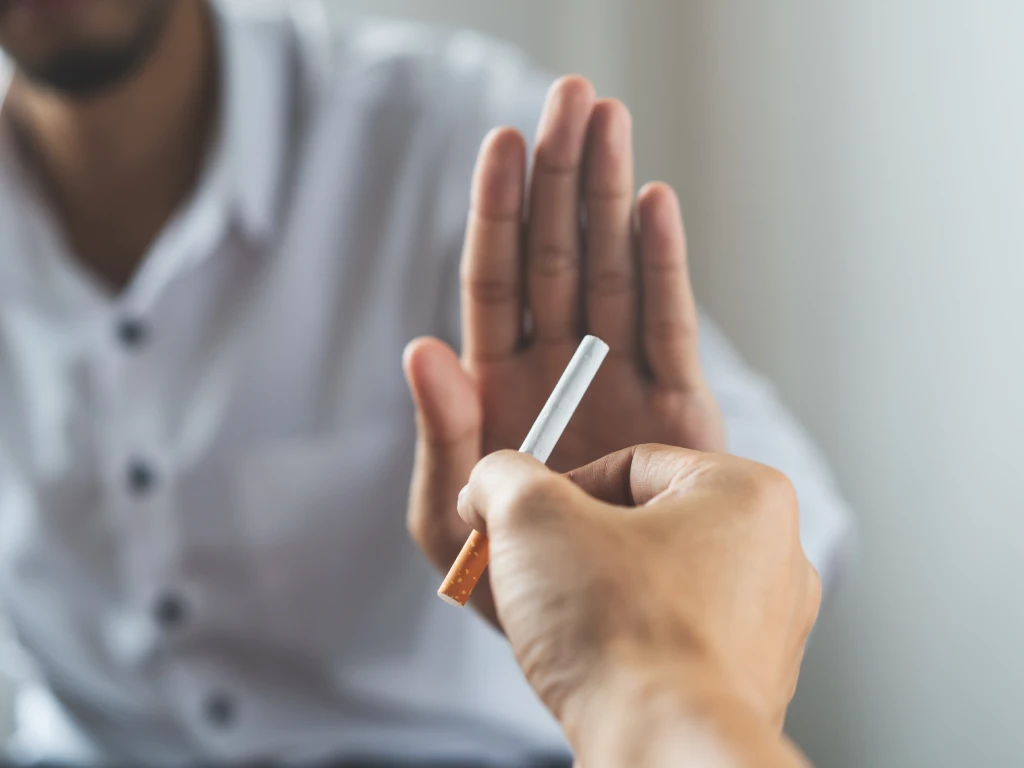
And if you slip and have a cigarette, don't despair — don't let it end the whole attempt. A slip is not a failure; many people who quit for good had a few false starts first. Notice what led to it, adjust your plan, and carry on.
Ready to take the next step?
Speak to a Healthway Medical GP about support for quitting smoking.
Frequently Asked Questions
How long do nicotine cravings last?
Individual cravings usually pass within a few minutes. Withdrawal symptoms are often strongest in the first few days, especially the first week, and usually ease gradually over the next three to four weeks as your body adjusts.
Will I gain weight when I quit?
Some people do gain a little weight, partly because food tastes better once your senses recover and partly because smoking suppresses appetite. It is manageable. Keeping healthy snacks on hand, drinking water, and staying active can help, and the health benefits of quitting far outweigh gaining a few kilograms.
Is vaping a safe way to quit smoking?
No. Vaping still delivers addictive nicotine and other harmful substances and is illegal in Singapore. It is not a legal or recommended quit-smoking option in Singapore. Speak to a GP or pharmacist about approaches that are known to work instead. If you are trying to quit vaping, the same steps and support in this guide apply.
Can my GP help me quit?
Your GP can assess your situation, support you with nicotine replacement therapy, refer you to counselling or smoking cessation programmes, and follow up with you as part of your regular care.
Does quitting smoking help if I already have COPD?
Yes. While existing lung damage cannot be reversed, stopping smoking can slow further decline at any stage. If you have asthma, quitting smoking can also improve symptom control and reduce flare-ups.
Related Doctor

Dr Vincent Chong
Family Physician MBBS (Bachelor of Medicine & Bachelor of Surgery) 2000, GDFM (Graduate Diploma Family Medicine) 2008Related Articles

When "It Runs in the Family" Deserves a Closer Look
August 14, 2026
Hepatitis: Types, Screening and Prevention in Singapore
July 28, 2026