

You can feel well, eat sensibly and still have high cholesterol.
High cholesterol usually does not cause noticeable symptoms for many people. The condition is usually discovered through blood tests during health screening or a routine review for other conditions.
The issue with having high cholesterol levels over time, is that it can contribute to fatty deposits inside the arteries of the heart. This may restrict blood flow and increase the risk of heart disease and stroke1.
High cholesterol can often be managed through lifestyle changes, medication (where needed) and regular follow-ups with your doctor.
What Is High Cholesterol?
Cholesterol is a waxy substance that your body needs to build cells and produce hormones such as cortisol, testosterone, and estrogen. Most cholesterol is made by the liver, while some come from food. Because cholesterol cannot travel through the blood on its own, it is carried through the bloodstream by particles called lipoproteins.
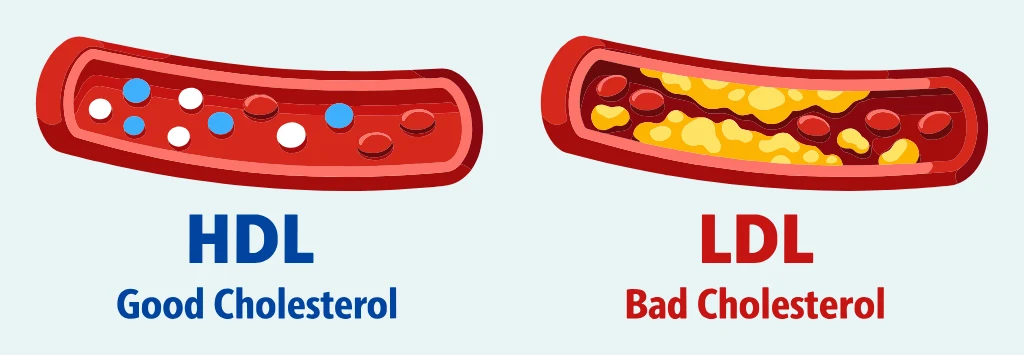
High cholesterol is a type of lipid disorder. It occurs when the amount of cholesterol in your blood, particularly low-density lipoprotein (LDL) cholesterol, often called “bad” cholesterol, is higher than the level considered suitable for your health.
Doctors may use the broader term hyperlipidaemia when cholesterol, triglycerides (another type of blood fat), or both, are raised.
How Is High Cholesterol Diagnosed?
A cholesterol blood test, also known as a lipid profile, measures cholesterol and triglycerides in your blood.
The main results include:
Low-Density Lipoprotein Cholesterol
Low density lipoprotein cholesterol, or LDL cholesterol, is often called “bad” cholesterol. When LDL cholesterol is too high, cholesterol can build up inside the arteries and form plaque. Over time, this may restrict blood flow and increase the risk of heart attack and stroke1.
High-Density Lipoprotein Cholesterol
High density lipoprotein cholesterol, or HDL cholesterol, is sometimes called “good” cholesterol. It helps carry excess cholesterol back to the liver for removal. A lower HDL level may be associated with greater cardiovascular risk. However, your HDL result should be considered together with your LDL cholesterol and other health factors.
Triglycerides
Triglycerides are a different type of fat found in the blood. Raised levels may be linked to excess weight, diabetes, high alcohol intake and diets high in refined carbohydrates. Very high levels can increase the risk of inflammation of the pancreas2.
Total Cholesterol
Total cholesterol measures the overall amount of cholesterol in your blood. However, it does not show how the cholesterol is distributed between LDL, HDL and other particles.
There is no single cholesterol target for everyone.
Your doctor will interpret your results together with factors such as your age, blood pressure, smoking status, blood sugar, kidney function, family history and existing medical conditions. This helps determine your overall cardiovascular risk and a suitable LDL cholesterol target and care plan.
Who Should Check Their Cholesterol?
People should generally start cardiovascular risk screening, including cholesterol screening, from age 40 under the Healthier SG Screening programme. Eligible Singapore Citizens are recommended to undergo screening at the recommended intervals3.
Younger adults may be advised to screen earlier or more frequently if they have additional risk factors, such as:
Earlier or more frequent cholesterol tests may be suitable if you:
- Have diabetes, high blood pressure or chronic kidney disease
- Smoke, or are overweight
- Have a family history of high cholesterol, early heart disease or stroke
- Have previously recorded a high cholesterol result
- Take medication or have a condition that may affect cholesterol levels
If you have already been diagnosed with high cholesterol, follow the testing schedule recommended by your doctor.

Managing High Cholesterol
Managing high cholesterol helps reduce the risk of heart disease and stroke. Your care plan will depend on your cholesterol levels, overall cardiovascular risk and medical history.
How High Cholesterol May Be Managed
Eating a heart-healthy diet can help reduce your risk of developing high cholesterol and may help lower your cholesterol levels. A heart-healthy diet includes more fruit, vegetables, whole grains, beans, fish, nuts and lean meat, while limiting fatty and processed meats and foods high in saturated or trans-fats.
Besides consuming a heart-healthy diet, it is also important to maintain a healthy lifestyle, such as:
- Staying active: Aim for 150 to 300 minutes of moderate-intensity physical activity each week, such as brisk walking, cycling or swimming4.
- Working towards a healthy weight: If you are overweight, gradual weight loss may help improve your cholesterol and triglyceride levels.
- Stopping smoking: Smoking damages the blood vessels and further increases cardiovascular risk.
- Limiting alcohol: Drinking too much alcohol can raise triglyceride levels.
When lifestyle changes are not sufficient to lower cholesterol levels, your doctor may prescribe medication. By consuming the prescribed medication while living a healthy lifestyle, you can keep your cholesterol in a healthy range and reduce the risk of heart disease and stroke. Do consult your doctor about your risk of high cholesterol and how you can manage it.
When to Seek Medical Attention
Speak to a doctor if a blood test shows that your cholesterol is high, or if you have risk factors such as diabetes, high blood pressure, chronic kidney disease, or a family history of very high cholesterol or early heart disease.
Seek emergency medical attention and call 995 if you experience possible signs of a heart attack or stroke, such as:
- Chest pain, pressure or tightness
- Sudden shortness of breath
- Sudden facial drooping
- Sudden weakness or numbness on one side of the body
- Sudden difficulty speaking or understanding speech
- Sudden loss of balance or vision
High Cholesterol Care at Your GP

A GP can support both the detection and long-term management of high cholesterol.
Your GP can help by:
- Assessing your risk factors, family history and related health conditions
- Arranging and explaining cholesterol blood tests
- Assessing your cardiovascular risk and discussing a suitable LDL cholesterol target
- Providing lifestyle advice and prescribing medication where appropriate
- Monitoring your results, treatment response and possible side effects
- Referring you to an endocrinologist, cardiologist or lipid specialist if further assessment is needed
Regular follow-up is important because cholesterol levels and cardiovascular risk can change over time. It also allows your doctor to review your cholesterol alongside your blood pressure, blood sugar, weight and other health concerns.
Using MediSave for High Cholesterol Care
Hyperlipidaemia, also known as lipid disorder, is covered under Singapore’s Chronic Disease Management Programme5.
Eligible patients may use MediSave for approved outpatient high cholesterol care at MediSave-accredited clinics, subject to the prevailing withdrawal limits and eligibility requirements.
Singapore Citizens and Permanent Residents receiving CDMP treatment at their enrolled Healthier SG clinic can use MediSave to pay eligible bills up to the prevailing withdrawal limits without the 15% cash co-payment6. CHAS, Pioneer Generation and Merdeka Generation subsidies may also apply7.
From 1 January 2027, the MediSave limits for chronic and preventive care will increase to $700 a year for patients with simple chronic care needs and $1,000 for those with complex chronic care needs8.
All Healthway Medical GP clinics are accredited CDMP providers. Please check with the clinic team regarding your eligibility, available subsidies and payment options.
Find a Healthway Medical Clinic Near YouFrequently Asked Questions About High Cholesterol
Yes. Diet and physical activity affect cholesterol, but genetics, age, medical conditions and medications can also play a part. A person can appear fit and still have high LDL cholesterol.
There is no single result that applies to everyone. Your doctor will consider your LDL cholesterol together with your overall cardiovascular risk. People with heart disease, diabetes, chronic kidney disease or familial hypercholesterolaemia may need a lower LDL target2.
Not always. A non-fasting test may be suitable for many routine cholesterol checks. Fasting may be recommended if your triglycerides are high or your doctor requires a fasting result. Follow the instructions from your clinic or laboratory.
Lifestyle changes may be enough for some people with lower cardiovascular risk. Others may still require medication because of their cholesterol level, family history or other health conditions. Your doctor can advise which approach is suitable for you.
Do not stop taking statins without medical advice. Your cholesterol may rise again after the medication is stopped. If you have concerns or possible side effects, speak to your doctor so that your treatment can be reviewed.
The recommended interval depends on your age, results and health risks. People receiving treatment or living with conditions such as diabetes may need more frequent testing. Your doctor can recommend a suitable schedule.
Regular physical activity, stopping smoking, maintaining a healthy weight and replacing saturated fats with unsaturated fats may help improve HDL cholesterol. However, HDL is only one part of your cardiovascular risk. Managing high LDL cholesterol remains important even if your HDL level is high.
You may be able to lower LDL cholesterol by:
- Limiting foods high in saturated or trans fats
- Eating more soluble fibre from foods such as oats, barley and beans
- Choosing vegetables, fruit, whole grains, fish, nuts and lean meat
- Staying physically active
- Working towards a healthy weight, if needed
Lifestyle changes may not be enough for everyone, particularly those with very high LDL cholesterol, familial hypercholesterolaemia or a higher cardiovascular risk. Take any prescribed medication as directed and speak to your doctor before making changes.
References
- HealthHub Singapore. Hyperlipidemia. Available at: https://www.healthhub.sg/health-conditions/hyperlipidemia
- Agency for Care Effectiveness (ACE), Ministry of Health Singapore. Lipid Management: Focus on Cardiovascular Risk. ACE Clinical Guideline. Last updated 4 August 2026. Available at: https://www.ace-hta.gov.sg/healthcare-professionals/acg/lipids-title-test/
- HealthHub Singapore. Healthier SG Screening – National Health Screening Programme. Available at: https://www.healthhub.sg/programmes/healthiersg-screening/
- Health Promotion Board. Singapore’s Physical Activity Guidelines Revised to Tackle Sedentarism and Promote Variation in Physical Activity. Available at: https://www.hpb.gov.sg/newsroom/singapore-s-physical-activity-guidelines-revised-to-tackle-sedentarism-and-promote-variation-in-physical-activity/
- Ministry of Health Singapore, Health Professionals Portal. MediSave for the Chronic Disease Management Programme. Available at: https://hpp.moh.gov.sg/guidelines/medisave-for-chronic-disease-management-programme/
- Ministry of Health Singapore. Outpatient Care. Available at: https://www.moh.gov.sg/managing-expenses/schemes-and-subsidies/medisave/outpatient-care/
- Ministry of Health Singapore. Community Health Assist Scheme. Available at: https://www.moh.gov.sg/managing-expenses/schemes-and-subsidies/chas/
- Ministry of Health Singapore. Ensuring Sustainable Support for Seniors’ Healthcare Needs. 17 August 2026. Available at: https://www.moh.gov.sg/newsroom/ensuring-sustainable-support-for-seniors--healthcare-needs/