

Osteoarthritis is a long-term joint condition that commonly affects the knees, hips, hands and spine. Symptoms may come and go or gradually make walking, climbing stairs and other everyday activities more difficult.
Although osteoarthritis cannot currently be cured, suitable exercise, weight management, medication and other treatments can help manage pain and support mobility.
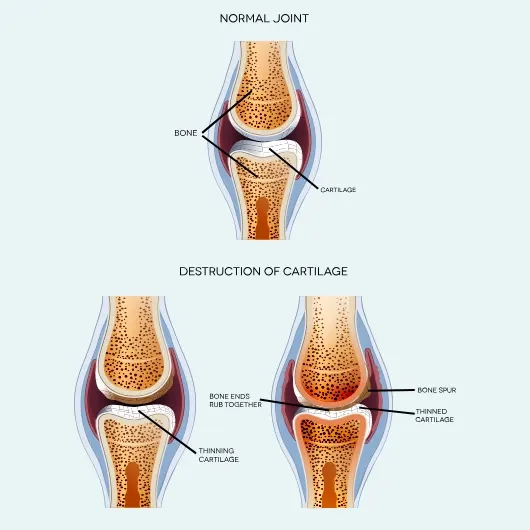
What Is Osteoarthritis?
Osteoarthritis is the most common form of arthritis. It is sometimes called degenerative joint disease.
A healthy joint contains cartilage, a smooth tissue that covers the ends of the bones and helps them move against each other. In osteoarthritis, this cartilage gradually breaks down and may become thinner and rougher.
Although osteoarthritis is sometimes described as “wear and tear”, it is a complex condition that can also affect the bone, joint lining, ligaments, tendons and surrounding muscles. These changes can cause pain, stiffness and reduced movement.
Osteoarthritis is different from osteoporosis. Osteoarthritis affects the joints, while osteoporosis weakens the bones and increases the risk of fractures.
Symptoms of Osteoarthritis
Osteoarthritis symptoms vary depending on the joint affected and the severity of the condition.
Common symptoms include:
- Joint pain that worsens with movement or prolonged activity
- Stiffness after waking or resting, but eases with movement
- Swelling or tenderness around the joint
- A grinding, grating or cracking sensation during movement
- Reduced movement or flexibility
- Weakness or instability around the joint
- Changes in the shape or appearance of the joint
Symptoms may be mild and occasional at first. Over time, they may become more frequent, and begin to affect walking, sleep, work and everyday activities.
Who Is More Likely to Develop Osteoarthritis?
Osteoarthritis can affect anyone, although the risk generally increases with age.
You may be more likely to develop osteoarthritis if you:
- Are getting older
- Are overweight, particularly if the knees or hips are affected
- Have previously injured, or had surgery on, a joint
- Frequently place heavy or repetitive strain on your joint(s)
- Have weak muscles around your joint(s)
- Have a family history of osteoarthritis
- Have a joint that developed or is shaped differently
- Have joint condition, such as rheumatoid arthritis or gout, that has caused damage
Women are also more likely to develop osteoarthritis, particularly after the age of 501.
Having one or more risk factors does not mean that you have osteoarthritis. A doctor can assess your symptoms and determine whether further evaluation is needed.
How Is Osteoarthritis Diagnosed?
Osteoarthritis is usually diagnosed based on your symptoms and with a physical examination. Your doctor will assess the affected joint(s), how well it moves and how your symptoms affect daily activities.
Tests may be arranged if the diagnosis is unclear or another condition is suspected.
X-ray
An X-ray may be arranged if the diagnosis is unclear, your symptoms are unusual or surgery is being considered. It can show changes such as reduced joint space or bony growths. However, X-ray findings do not always match the severity of a person’s symptoms.
Blood Tests
Blood tests do not diagnose osteoarthritis. They may be used to check for other causes of joint pain, such as rheumatoid arthritis, gout or an infection.
Other Tests
An MRI scan or a sample of joint fluid may occasionally be needed if your doctor suspects an injury or another joint condition.
Managing Osteoarthritis

Managing osteoarthritis aims to relieve pain, maintain movement and help you continue with everyday activities.
How Osteoarthritis May Be Managed
Exercise and Physical Activity
Many people worry that exercise will worsen osteoarthritis, but suitable exercise is an important part of managing the condition. It can strengthen the muscles supporting your joints, improve flexibility and make everyday movement easier.
Depending on the affected joint, your symptoms and abilities, this may include strengthening, aerobic, flexibility and balance exercises. A doctor or physiotherapist can advise you on a suitable programme.
If you are overweight, gradual weight loss can reduce pressure on weight-bearing joints such as the knees and hips.
Your doctor may recommend a topical anti-inflammatory medicine for knee osteoarthritis. A short course of oral anti-inflammatory medication may be considered if topical treatment is unsuitable or does not provide enough relief.
These medicines are not suitable for everyone, so speak to your doctor before using them regularly.
Depending on your needs, treatment may also include:
- Physiotherapy or occupational therapy
- Suitable footwear, braces or walking aids
- A corticosteroid injection for short-term relief in selected cases
If pain and reduced mobility continue despite non-surgical treatment, an orthopaedic surgeon may discuss surgery. This may include joint replacement when osteoarthritis is severe and significantly affects daily life.
Not everyone with osteoarthritis requires surgery. Exercise, weight management and other treatments usually remain important before and after a procedure.
When to Seek Medical Attention
Speak to a doctor if joint pain or stiffness persists, repeatedly returns or begins to affect your movement, sleep or everyday activities.
Seek urgent medical attention if:
- A joint suddenly becomes very painful, hot, red or significantly swollen
- Joint pain is accompanied by fever or feeling very unwell
- You cannot stand, walk or bear weight after a fall or injury
- Your symptoms worsen rapidly or the joint changes shape suddenly
These symptoms may be caused by an infection, fracture or another condition requiring prompt assessment.
Osteoarthritis Care at Your GP

A GP can support the diagnosis and long-term management of osteoarthritis.
Your GP can help by:
- Assessing your joint symptoms and checking for other possible causes
- Advising whether an X-ray, blood test or other investigation is needed
- Monitoring your symptoms, mobility and medication
- Recommending suitable exercise, weight management and pain relief
- Referring you to a physiotherapist or occupational therapist where appropriate
- Referring you to an orthopaedic surgeon, rheumatologist or pain specialist if further care is needed
Regular follow-up allows your doctor to review changes in your experience of pain and mobility, allowing your care plan to be adjusted as needed.
Using MediSave for Osteoarthritis Care
Osteoarthritis is covered under Singapore’s Chronic Disease Management Programme (CMDP)2.
Eligible patients may use MediSave for approved outpatient osteoarthritis care at MediSave-accredited clinics, subject to prevailing withdrawal limits and eligibility requirements.
Singapore Citizens and Permanent Residents receiving CDMP treatment at their enrolled Healthier SG clinic can use MediSave to pay eligible bills up to the prevailing withdrawal limits without the usual 15% cash co-payment3. CHAS, Pioneer Generation and Merdeka Generation subsidies may also apply4.
From 1 January 2027, the MediSave limits for chronic and preventive care will increase to $700 a year for patients with simple chronic care needs and $1,000 for those with complex chronic care needs5.
All Healthway Medical GP clinics are accredited CDMP providers. Please check with the clinic team regarding your eligibility, available subsidies and payment options.
Find a Healthway Medical Clinic Near YouFrequently Asked Questions About Osteoarthritis
Early symptoms may include joint pain after prolonged activity, brief stiffness after waking or resting, and reduced flexibility. Symptoms may initially come and go before becoming more frequent.
Osteoarthritis involves gradual changes affecting the cartilage and other structures within a joint. Rheumatoid arthritis is an autoimmune condition in which the immune system attacks the joints. It often causes prolonged morning stiffness and may affect several joints on both sides of the body. A doctor can determine which condition may be causing your symptoms.
Osteoarthritis affects the joints and may cause pain, stiffness and reduced movement. Osteoporosis weakens the bones and makes them more likely to fracture. A person can have both conditions.
There is currently no permanent cure for osteoarthritis. However, symptoms do not always worsen continuously. Exercise, weight management, medication and other treatments can reduce pain and help maintain mobility.
Osteoarthritis cannot always be prevented. Maintaining a healthy weight, staying physically active, strengthening the muscles around your joints and reducing the risk of joint injuries may lower your risk and help manage symptoms if osteoarthritis develops.
Osteoarthritis can progress over time, but it does not worsen in the same way for everyone. Symptoms and joint changes may develop gradually, and everyday movement may become harder. Treatment can help manage symptoms, maintain mobility and improve quality of life.
There is mixed evidence on the effect of supplements such as glucosamine or chondroitin on pain, function, and reduced joint space narrowing. Speak to your doctor before taking supplements, particularly if you take other medication.
You can start by speaking to a GP. If your symptoms persist, significantly affect your mobility or may require surgery, your GP may refer you to an orthopaedic specialist for further assessment.
If you’re looking for an orthopaedic specialist in Singapore, Island Orthopaedics provides specialist care for bone, joint, muscle and spine conditions, including osteoarthritis. An orthopaedic specialist can assess the affected joint, review any imaging and discuss suitable non-surgical or surgical treatment where appropriate.
References
- SingHealth. Osteoarthritis – Symptoms, Causes and Treatments. Available at: https://www.singhealth.com.sg/tests-procedures/osteoarthritis
- Ministry of Health Singapore, Health Professionals Portal. MediSave for the Chronic Disease Management Programme. Available at: https://hpp.moh.gov.sg/guidelines/medisave-for-chronic-disease-management-programme/
- Ministry of Health Singapore. Outpatient Care. Available at: https://www.moh.gov.sg/managing-expenses/schemes-and-subsidies/medisave/outpatient-care/
- Ministry of Health Singapore. Community Health Assist Scheme. Available at: https://www.moh.gov.sg/managing-expenses/schemes-and-subsidies/chas/
- Ministry of Health Singapore. Ensuring Sustainable Support for Seniors’ Healthcare Needs. 17 August 2026. Available at: https://www.moh.gov.sg/newsroom/ensuring-sustainable-support-for-seniors--healthcare-needs/