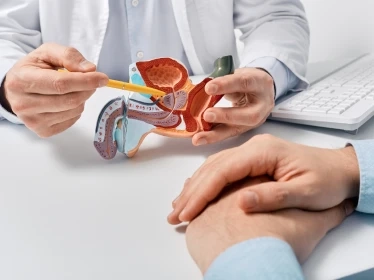

One day, you start to notice a dull ache or discomfort down there in the area between your legs. Maybe it comes and goes away or perhaps weighs a little heavier at the end of a long day, after a workout or following hours on your feet.
It’s easy to brush it off and carry on. But if that discomfort keeps coming back, it may be worth finding out what’s behind it.
One possible cause is a varicocele, enlarged veins of the testicle that can cause aching or heaviness. In some men, it may be a factor affecting fertility.
So, when is it simply something to keep an eye on, and when should you see a doctor?
Here’s what men should know about varicoceles.
What is a Varicocele?
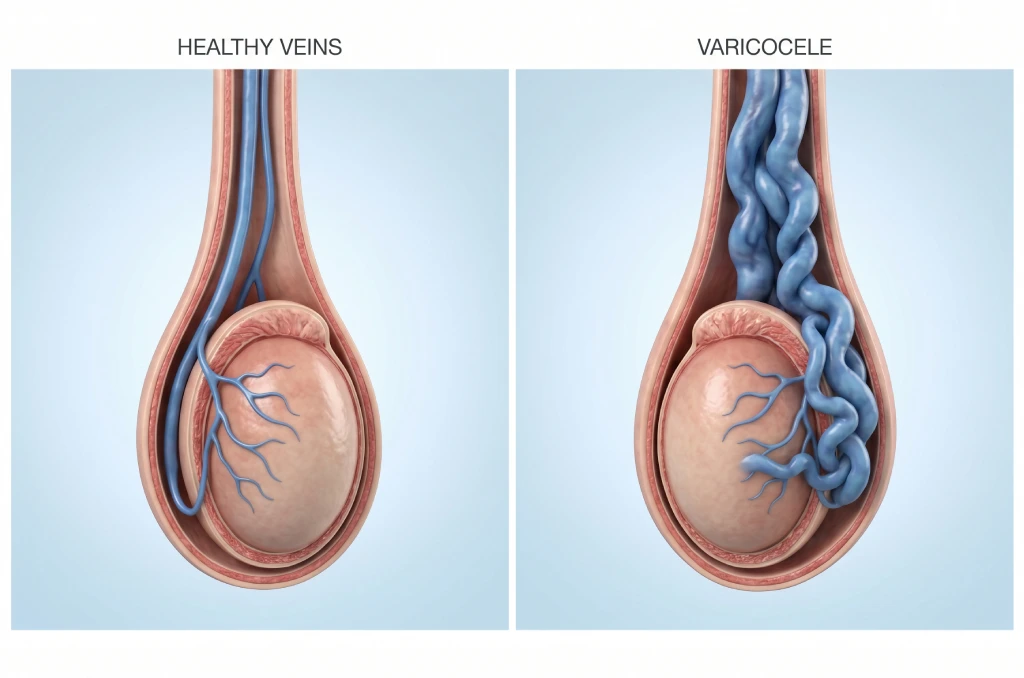
A varicocele is an enlargement of the veins from the testicles, the organ that creates sperm.
These veins normally carry blood away from the testicles. When blood does not drain as efficiently as it should, it can collect in the veins, causing them to enlarge.
Varicoceles often develop during puberty and may become more noticeable over time. They are common and many men do not realise they have one until it is discovered during a physical examination or fertility assessment.
Varicoceles occur most commonly on the left testicle, although they can happen on the right testicle, or even to both.
What Causes a Varicocele?
Veins contain valves that help keep blood moving in the right direction, back to the body.
A varicocele may develop when these valves do not work properly, allowing blood to flow backwards or collect in the veins around the testicle. Over time, the veins may become enlarged.
Varicoceles are more common on the left side partly because of the way the veins draining the left testicle connect with other blood vessels in the body.
In many cases, there is no single action or lifestyle habit that causes a varicocele.
What Does a Varicocele Feel Like?
Some men with a varicocele have no noticeable symptoms.
When symptoms do occur, pain from a varicocele is usually described as a dull ache, a dragging sensation or feeling of heaviness rather than sudden, sharp pain.
The discomfort may become more noticeable:
- After standing for a long time.
- Later in the day.
- After exercise or physical activity.
- As a heavier-than-usual feeling in the scrotum.
Discomfort may improve when you lie down. A larger varicocele may also cause the veins above the testicle to become more visible, or easier to feel. They may feel like a soft collection of tangled veins, sometimes described as a “bag of worms”.
However, not every lump, swelling or ache in the scrotum is caused by a varicocele. Other conditions can cause similar symptoms, so a medical assessment is important if you notice a new or persistent change.
Could a Varicocele Affect Fertility?
It can, although not every man with a varicocele will have fertility problems.
The testicles need an appropriate environment to produce healthy sperm. A varicocele can alter the conditions around the testicle and is associated with reduced sperm production or changes in sperm quality.
For some men, a varicocele is discovered during fertility assessments, after experiencing issues when trying to conceive. If fertility is a concern, your urologist may recommend a semen analysis to assess:
- Sperm concentration.
- Sperm movement, or motility.
- Sperm shape, or morphology.
A semen analysis does not diagnose a varicocele by itself. Instead, it helps determine whether the varicocele may be associated with changes in sperm production or quality.
It is also important to remember that finding a varicocele does not automatically mean it is the reason a couple experiences difficulty conceiving. Fertility involves both partners and can be affected by many different factors.
How Is a Varicocele Diagnosed?
Your doctor will usually begin by asking about your symptoms, when they occur and whether you have any fertility concerns.
A physical examination is an important part of varicocele diagnosis.
Your doctor may examine the scrotum while you are standing or lying down. Your doctor may also ask you to take a deep breath and briefly bear down. This can make enlarged veins easier to feel.
Is an Ultrasound Needed?
If the diagnosis is unclear, your doctor may recommend a scrotal ultrasound. This uses sound waves to create images of the testicles and their surrounding structures.
An ultrasound may help:
- Confirm the presence of a varicocele.
- Assess blood flow.
- Examine the testicles.
- Look for other possible causes of swelling or discomfort.
If fertility is a concern, a semen analysis or other investigations may also be recommended.
“A varicocele may not cause any symptoms, but it should be assessed because, in some men, it can affect the health and development of the testicle. Over time, a significant varicocele may be associated with reduced testicular size, as well as changes in sperm production and fertility.”
— Dr Nathaniel Heah, Consultant Urologist at Urohealth Medical Clinic.
How to Relieve Varicocele Pain
If a varicocele causes mild aching or heaviness, simple measures may help relieve the discomfort.
You may try:
- Wearing supportive underwear or a scrotal support.
- Resting or lying down when discomfort occurs.
- Avoiding activities that consistently worsen the pain.
- Taking simple pain relief, if suitable for you.
These measures may help control varicocele pain, but they do not remove the enlarged veins themselves.
If the pain keeps returning, becomes more severe or begins to affect your daily activities, speak to a doctor. Persistent pain should also be assessed to rule out more serious causes.
How Is a Varicocele Treated?
Not every varicocele needs treatment.
If it is not causing significant discomfort, affecting the testicle or contributing to fertility problems, your doctor may recommend monitoring it.
Varicocele treatment may be considered when there is:
- Persistent pain that does not improve with conservative measures.
- A difference in testicular size or development in an adolescent or young adult.
- Fertility concerns together with relevant examination or semen analysis findings.
- Another clinical reason identified by your doctor.
There are two main procedures that may be considered.
1. Varicocelectomy
A varicocelectomy is a surgical procedure that closes or ties off the affected veins.
Blood is then redirected through other healthy veins.
Different surgical techniques may be used depending on your condition and your doctor's assessment, but the procedure usually involves using a surgical microscope.
2. Varicocele Embolization
Embolization is a minimally invasive procedure.
A specialist inserts a thin catheter into a blood vessel and guides it towards the affected vein. The vein is then blocked so that blood is redirected through healthier veins.
Not every treatment option is suitable for every patient. Your doctor can discuss the potential benefits, limitations, and risks of each approach with you.
Treatment does not guarantee that pain or fertility problems will resolve, so it is important to first confirm that the varicocele is the cause of your symptoms.
When Should You See a Doctor?

It can be tempting to ignore a mild ache, particularly when it comes and goes.
Consider seeing a doctor if you notice:
- Ongoing or recurring pain in the scrotum.
- Swollen or enlarged veins.
- A new lump.
- A change in the size or shape of a testicle.
- One testicle suddenly appearing smaller than the other.
- Persistent heaviness or discomfort in the scrotum.
- Fertility concerns.
- A change around the testicle that you are unsure about.
There are several possible causes of scrotal pain, swelling, and lumps. Have the cause assessed by a specialist instead of self-diagnosing the issue.
When Is Testicular Pain an Emergency?
Seek urgent medical attention if you develop sudden or severe testicular pain, particularly if it occurs with:
- Sudden swelling.
- Nausea.
- Vomiting.
- Significant tenderness.
Sudden severe testicular pain can have causes other than a varicocele that require prompt medical assessment.
Don't Ignore Changes Down There
Talking about pain or changes around the testicles can feel awkward, but reproductive and sexual health are part of your overall health.
A varicocele may cause no problems and require nothing more than monitoring. In other men, it may contribute to ongoing discomfort, changes in the testicle or fertility concerns.
The important thing is knowing what is causing your symptoms. When in doubt, speak to a urologist for a specialist assessment. Our urologists at Urohealth Medical Clinic, Dr Nathaniel Heah, and Dr Tan Yung Khan can assess your symptoms and advise on the appropriate next steps.
Frequently Asked Questions About Varicoceles
Is it normal for one testicle to be slightly bigger than the other?
Yes. Some differences in testicle size or position can be normal. However, if the difference is new, increasing, or associated with pain, swelling, a lump, or a change in firmness, it should be assessed by a doctor.
Can a bigger testicle be a sign of varicocele?
Not usually. A varicocele is an enlargement of the veins surrounding the testicle. When a varicocele affects testicular development, the affected testicle may instead be smaller than the other. A genuinely enlarged testicle or new scrotal swelling can have other causes and should be evaluated by a urologist.
Is a varicocele dangerous?
Most varicoceles are not dangerous and many do not require treatment. However, some may be associated with persistent discomfort, changes in the testicle or fertility problems.
A doctor can assess whether monitoring or treatment is appropriate.
Can a varicocele go away on its own?
A varicocele generally does not disappear on its own. However, if it is not causing symptoms or other problems, treatment may not be necessary.
Can you exercise if you have a varicocele?
Many men with a varicocele can continue exercising.
However, if certain exercises consistently cause aching or heaviness, reducing or modifying those activities may help. Persistent or worsening pain should be assessed by a doctor.
Does every varicocele need treatment?
No. Treatment is usually considered when a varicocele is causing persistent pain, affecting the testicle or contributing to fertility problems. A specialist will be able to diagnose the severity of the issue and recommend an appropriate next step.
Can a varicocele affect sperm quality?
It may in some men. A varicocele can be associated with changes in sperm production or quality, but many men with varicoceles remain fertile.
If you are having difficulty conceiving, your doctor may recommend a semen analysis as part of a male fertility assessment.
Can varicocele treatment improve fertility?
For selected men, treating a clinically significant varicocele has been shown to improve semen parameters and may form part of a fertility treatment plan.
However, treatment is not a guarantee of pregnancy and is not necessary for every man with a varicocele. The decision should take into account the clinical examination, fertility history, semen analysis, and the fertility goals of the couple. Speak to a urologist for an accurate assessment, diagnosis, and appropriate multidisciplinary treatment plan.

Medically Reviewed by Dr. Nathaniel Heah
Senior Consultant Urologist
Related Articles

Can pre-diabetes be reversed?
November 14, 2026
Pre-diabetes in Singapore: What It Is and How It Is Detected
November 14, 2026