
Key Takeaways
- Pre-diabetes means your blood sugar is above normal, but not yet in the diabetes range.
- It usually has no symptoms, so a blood test is needed to detect it.
- Early action can help prevent or delay type 2 diabetes.
- In Singapore, pre-diabetes is confirmed with a fasting plasma glucose test or an OGTT, not HbA1c alone.
- Pre-diabetes is covered under the Chronic Disease Management Programme (CDMP), so MediSave can be used for eligible treatment, subject to withdrawal limits.
In 2017, the Ministry of Health estimated that about 1 in 7 Singaporeans aged 18 to 69 had pre-diabetes. Pre-diabetes usually shows no symptoms, so many people may not realise they have it. In a 2024 survey by NUS and Diabetes Singapore, nearly 70% of participants with pre-diabetes believed they did not have it.
If diabetes runs in your family, or your screening shows slightly high blood sugar, do not brush it aside. Pre-diabetes is often an early sign that your body is finding it harder to manage blood sugar, and a good time to act. It does not mean you will definitely get type 2 diabetes. Whether you are concerned about your risk or have already been told you have pre-diabetes, a GP can guide you on what to do next.
What Is Pre-diabetes?
Pre-diabetes is when your blood sugar level is higher than normal, but not high enough to be diagnosed as type 2 diabetes. It is sometimes called borderline diabetes.
It develops when the insulin your pancreas produces is no longer enough to keep blood sugar within the normal range. This often happens as your cells become less responsive to insulin, a condition called insulin resistance.
To understand this, it helps to look at how your body normally handles a meal containing starchy foods:
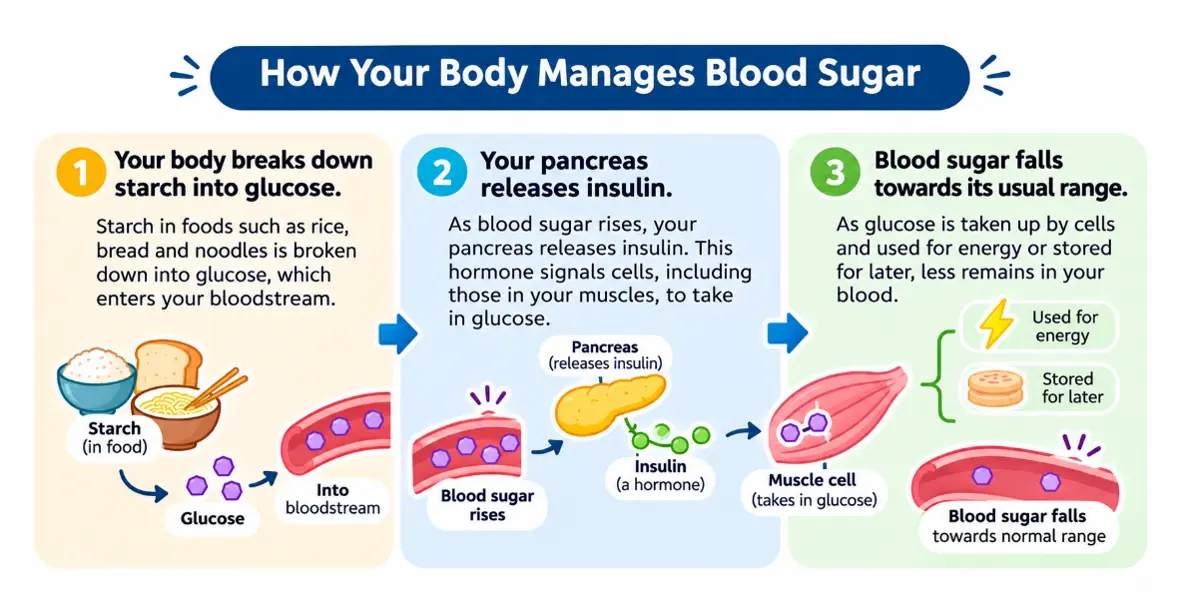
- Your body breaks down starch into glucose.
Starch in foods such as rice, bread and noodles is broken down into glucose, which enters your bloodstream. - Your pancreas releases insulin.
As blood sugar rises, your pancreas releases insulin. This hormone signals cells, including those in your muscles, to take in glucose. - Blood sugar falls towards its usual range.
As glucose is taken up by cells and used for energy or stored for later, less remains in your blood.
When cells respond less readily to insulin, your pancreas may produce extra insulin to keep blood sugar normal for some time. However, if it cannot meet the increased demand, blood sugar begins to rise.
Pre-diabetes: Who Should Get Checked?
Most people with pre-diabetes feel well and have no clear symptoms. Screening matters most if you are at higher risk, for example if you:
- Have a parent or sibling with type 2 diabetes.
- Have a body mass index (BMI) of 23 or higher.
- Carry extra weight around your waist⁵.
- Are 40 years or older.
- Are not physically active.
- Had diabetes during pregnancy (gestational diabetes).
- Have high blood pressure or high cholesterol³.
Family history plays a bigger role than many people realise, so it helps to find out which conditions run in your family. A blood test can detect it before symptoms appear, making screening important for people at higher risk.
When Should You Go for Screening?
If you are aged 18 to 39, the Diabetes Risk Assessment is a short online questionnaire that helps identify whether you should go for diabetes screening. If your result shows a lower risk, repeat it every two years, or sooner if your risk factors change. A higher-risk result should be followed by a screening blood test.
From age 40, cardiovascular risk screening, which includes a diabetes check, is generally recommended every three years. Subsidies are available under Healthier SG Screening, subject to eligibility.
Your doctor may recommend earlier or more frequent testing based on your health history. If you already have pre-diabetes, you will need a follow-up schedule rather than the routine screening interval. ¹˒⁴
What Tests Detect Pre-diabetes?
Tests used to detect pre-diabetes include fasting plasma glucose and an oral glucose tolerance test (OGTT). They assess blood sugar under different conditions:
- Fasting plasma glucose measures your blood sugar after an overnight fast.
- An oral glucose tolerance test (OGTT) checks how your body handles glucose. Blood samples are taken after fasting and two hours after you drink a standard glucose solution. Its thresholds should not be applied directly to blood sugar readings taken after an ordinary meal.
Your GP will advise which test is right for you and explain how to prepare, including how long to fast.
What Counts as Pre-diabetes?
Your results may show pre-diabetes if they fall within these ranges:
- Fasting plasma glucose: 6.1 to 6.9 mmol/L, known as impaired fasting glucose (IFG).
- Two-hour OGTT: 7.8 to 11.0 mmol/L, known as impaired glucose tolerance (IGT).
| Test | Normal range | Pre-diabetes range | Diabetes range |
|---|---|---|---|
| Fasting plasma glucose | 6.0 mmol/L or below | 6.1–6.9 mmol/L | 7.0 mmol/L or above |
| Two-hour OGTT | Below 7.8 mmol/L | 7.8–11.0 mmol/L | 11.1 mmol/L or above |
These are the thresholds used in Singapore for non-pregnant adults. ¹˒² Your report may show IFG or IGT instead of the word “pre-diabetes”. Your doctor will look at your results alongside your health history before advising on next steps.
What About HbA1c?
HbA1c reflects your average blood sugar over roughly the past two to three months and does not require fasting. In Singapore, it can be used for initial diabetes screening, but it is not used on its own to diagnose pre-diabetes. ¹˒²
An HbA1c result of 6.1–6.9% requires further testing with fasting plasma glucose or an OGTT to determine your glucose status. ²
Why Early Action Matters
Pre-diabetes can progress to type 2 diabetes if blood sugar rises further into the diabetes range. Without lifestyle changes, at least a third of people with pre-diabetes in Singapore develop type 2 diabetes within eight years. ¹ Acting early can lower this risk.
Regular physical activity and weight loss where appropriate can improve insulin sensitivity, helping some people bring their blood sugar back into the normal range and prevent or delay type 2 diabetes. ¹˒⁵ Preventing or delaying type 2 diabetes also lowers your risk of complications that can affect the heart, kidneys, eyes and feet.
When and How Your GP Can Help
A GP can assess your blood sugar, explain your results and advise on next steps. Speak to a GP if:
- You have any of the risk factors above and have not been screened recently.
- You experience increased thirst, frequent urination, unexplained tiredness or blurred vision.
- Your screening shows raised blood sugar or an HbA1c result that needs further testing.
If you have pre-diabetes, your GP may first check for related conditions, such as high blood pressure and unhealthy cholesterol levels. They can then help you set realistic goals for your diet, activity and weight, and arrange follow-up blood tests to monitor your progress. If lifestyle changes alone are not enough, your GP can also discuss whether medication may help. ¹
Keep up regular reviews even if your blood sugar returns to normal, as levels can rise again. As pre-diabetes is covered under the Chronic Disease Management Programme (CDMP), you can use MediSave for this ongoing care, subject to withdrawal limits. ⁶
References
- Agency for Care Effectiveness, Managing Pre-diabetes: A Growing Health Concern (Appropriate Care Guide), updated 2021. https://www.ace-hta.gov.sg/healthcare-professionals/acg/managing-pre-diabetes----a-growing-health-concern-acg/
- Ministry of Health, MOH Circular No. 08/2019: Changes to Population Screening Tests, 2019. https://www.diabetes.org.sg/wp-content/uploads/2025/06/MOH-Circular-New-Screenting-Test.pdf
- HealthHub, Diabetes: Are You at Risk? https://healthhub.sg/live-healthy/diabetes-are-you-at-risk
- HealthHub, Healthier SG Screening FAQs. https://www.healthhub.sg/programmes/screen_for_life/sfl-faqs
- National Institute of Diabetes and Digestive and Kidney Diseases (NIDDK), Insulin Resistance & Prediabetes. https://www.niddk.nih.gov/health-information/diabetes/overview/what-is-diabetes/prediabetes-insulin-resistance
- Ministry of Health, Chronic Disease Management Programme (CDMP). https://www.moh.gov.sg/policies-and-legislation/chronic-disease-management-programme-(cdmp)
Related Doctor

Dr Scott Joel Heng
General PractitionerRelated Clinic

Healthway Medical (Tampines St 11) - formerly known as United Medical Practitioners Pte Ltd


Related Articles

Can pre-diabetes be reversed?
November 14, 2026
Prostate Cancer Stages Explained: What Happens at Each Stage?
November 09, 2026