
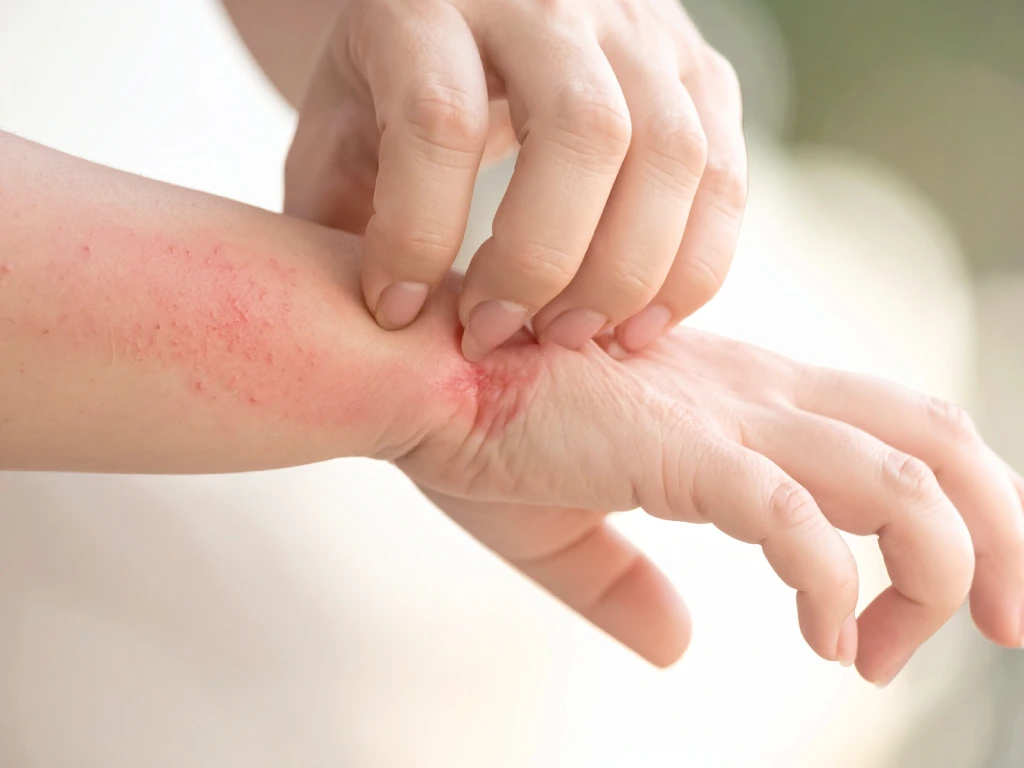
Travelling with eczema can take a little more planning, but it does not mean you have to miss out on a holiday or the activities you enjoy. The key is to understand what tends to trigger your symptoms and prepare for the situations you may encounter.
You cannot predict every flare-up, but thinking about your destination, activities and previous experiences can help you prepare and make the most of your time away.
What Can Trigger Eczema Flare-Ups During the Holidays?
Eczema refers to a group of skin conditions that cause dry, itchy and inflamed skin. One of the most common types is atopic eczema, which occurs when the skin's natural protective barrier weakens, making it harder for the skin to retain moisture and protect itself from irritants. An eczema flare-up happens when symptoms become worse, causing increased itching, redness and skin irritation.
Holiday activities do not cause atopic eczema, but they may bring you into contact with personal triggers. Cold, dry air, heat, sweating, unfamiliar products and stress may aggravate symptoms. Busy travel schedules may also make it harder to maintain your usual skincare routine.
Not everyone will experience a holiday-related flare-up, and triggers differ from person to person.
Travelling with Eczema? Here's How to Prepare
Prepare for Changes in Climate
Understanding which climate conditions trigger your skin irritation can help you prepare ahead and pack what you need.
If you're heading somewhere cold, pack soft layers that you can easily take off when stepping into heated buildings. Avoid wearing rough wool directly against your skin. Dry air can also leave your skin feeling uncomfortable, so if your usual moisturiser isn't doing enough, ask your doctor or pharmacist whether a richer cream or ointment might be a better option.
If you're heading somewhere hot, consider bringing a clean change of clothes so you can change out of sweaty clothing when needed. A clean, cool, damp towel may also help soothe itchy skin, but avoid applying ice directly to your skin.
Think About Potential Triggers in Your Accommodation
Hotel toiletries, bedding and laundry products may expose your skin to unfamiliar substances. While these aren't necessarily a problem for everyone with eczema, some people may be more sensitive to certain fabrics, fragrances or detergents.
If certain laundry products or fabrics irritate your skin, consider bringing your own bedsheets and pillowcases, or disposable bedding.
Ordinary sheets are not dust mite barriers. If dust mites are a known trigger and protective covers are part of your existing management plan, consider bringing your usual cover. Babies should continue to sleep in a clear cot without pillows or loose bedding.
Pack More Eczema Essentials Than You Think You'll Need
Running out of moisturiser or prescribed medication halfway through a trip can be stressful, especially when you're somewhere unfamiliar.
Bring enough moisturiser and prescribed medication for your entire trip, with some extra to allow for unexpected delays or changes to your plans. Pack your moisturiser and essential medication in your carry-on so they're easy to reach during the flight.
Plan Ahead If You Have Food Allergies
Food allergies are more common in children with eczema, particularly those with more severe eczema. While food allergies do not cause eczema, certain foods may worsen eczema symptoms in some people with a confirmed food allergy. However, food is not a trigger for everyone with eczema.
If you have a diagnosed food allergy, take extra precautions when travelling, particularly when flying. When booking your flight, inform the airline about your allergy and request a suitable special meal, if available. At the airport, remind check-in staff about your request and confirm that it has been recorded. Keep in mind that airlines may not be able to guarantee that meals are completely free from allergens or cross-contamination. Consider bringing your own suitable food after checking the airline's rules.
Remember to pack your prescribed adrenaline auto-injector (such as an EpiPen) in your carry-on bag so it's easily accessible throughout the flight. If you've been advised to carry two, bring both, along with your allergy action plan.
When Should You See a GP for Eczema?
Consider seeing a GP before travelling if your eczema is worsening, flares are frequent, treatment is not helping, or itching is disrupting your sleep or daily activities.
Scratching and damaged skin can increase the risk of infection. Seek prompt medical attention if you notice increasing pain, warmth, swelling, oozing or yellow crusting.
A GP can assess your symptoms, review your treatment and recommend appropriate management. They can also advise whether further assessment or a referral to a dermatologist is needed.
Enjoy Your Holidays with the Right Eczema Management Plan
You do not need to anticipate every possible trigger. Focus on your known sensitivities, keep treatment accessible and allow flexibility in your plans.
If your eczema has been difficult to control or you're concerned about a flare while away, speak to your doctor about managing your symptoms and what to do if they worsen during your trip.
If you need advice or support before travelling, book an appointment with a Healthway Medical Group GP for an assessment and personalised eczema management advice.
Related Articles

Can pre-diabetes be reversed?
November 14, 2026
Pre-diabetes in Singapore: What It Is and How It Is Detected
November 14, 2026